Best Chainsaws (2025) – 5 Models Tested for Homeowners & Pros
Best Chainsaws (2025) – 5 Models Tested for Homeowners & Pros
Choosing a chainsaw is less about brand loyalty and more about matching the saw to the type of work you actually do. Light yard cleanup, occasional pruning, and storm cleanup are very different from cutting cords of firewood or felling trees. The right chainsaw should feel balanced, start reliably, and have enough power for your typical workload without wearing you out.
This guide covers proven, widely available models across both gas and battery. If you want the easiest ownership experience, a battery chainsaw is now a strong option for many homeowners. If you do frequent heavy cutting or need long runtime, gas still makes sense.
Quick Comparison: Top Chainsaws
| Model | Power Type | Best Use | Effort Level | Best For |
|---|---|---|---|---|
| Stihl MS 250 | Gas | Firewood, heavier cuts | Moderate | Reliable mid-duty gas |
| Husqvarna 450 Rancher | Gas | Heavier cutting | Moderate | Strong homeowner gas |
| Echo CS-590 | Gas | Tough jobs | Higher | Best value gas power |
| EGO Power+ Chainsaw | Battery | Yard cleanup | Easy | Quiet, low maintenance |
| DeWalt 20V Max Chainsaw | Battery | Light pruning | Easy | Compact battery option |
Our Top 5 Chainsaw Picks
1) Stihl MS 250 – Best Overall Gas
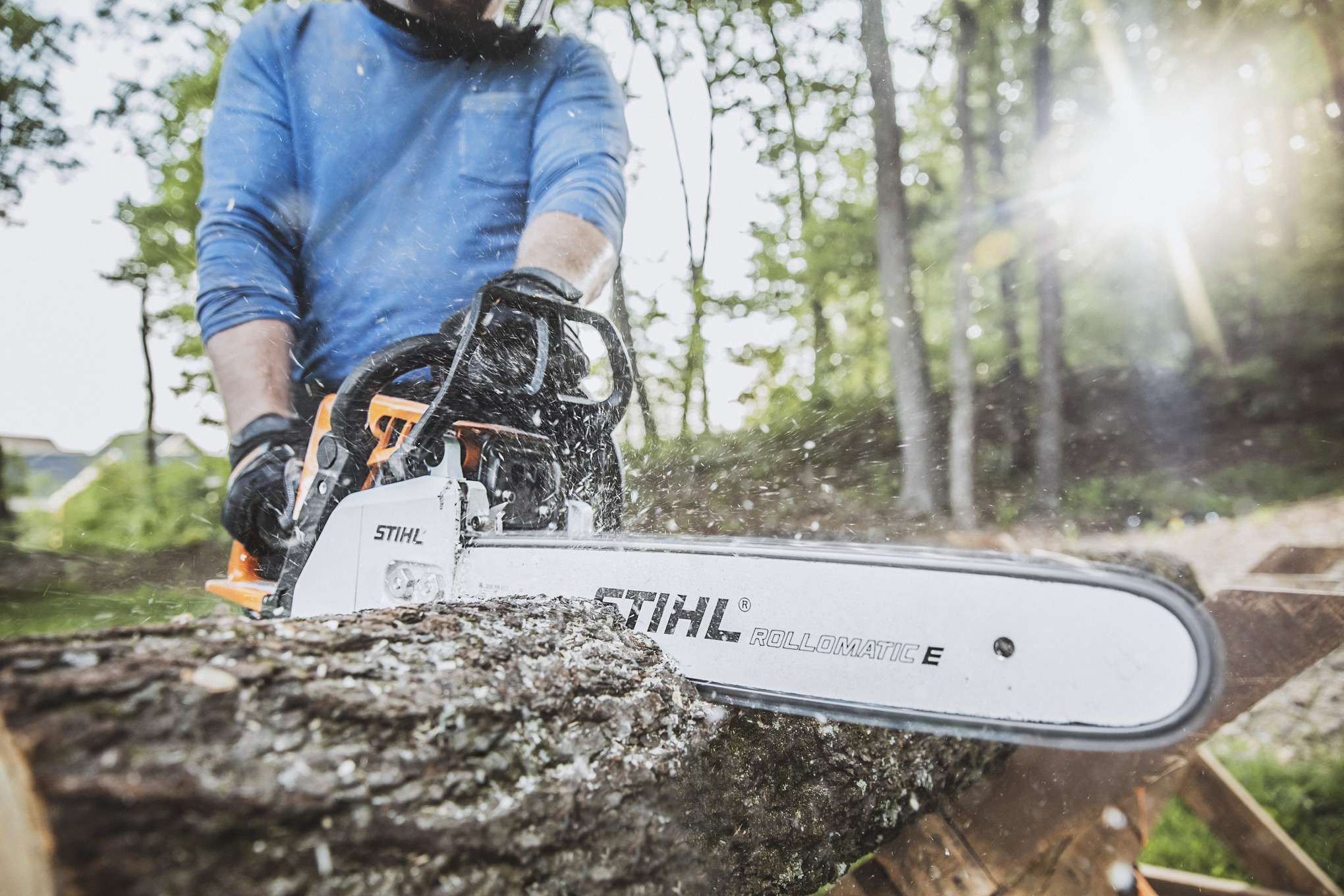
The Stihl MS 250 is a long-time favorite for homeowners who want real cutting power without jumping to pro-only saws. It balances power and weight well and is supported by a strong dealer network.
Best for: Regular firewood cutting and heavier yard work.
2) Husqvarna 450 Rancher – Best Premium Homeowner Pick
The 450 Rancher is a solid step up for homeowners who cut frequently. It is smooth, powerful, and built to handle longer sessions.
Best for: Larger properties and frequent cutting.
3) Echo CS-590 – Best Value Gas Power
If you want strong performance without premium pricing, the Echo CS-590 is a common pick. It is a workhorse for the money, and it holds up well with basic maintenance.
Best for: Budget-minded buyers who still need real power.
4) EGO Power+ Chainsaw – Best Battery Overall
EGO battery chainsaws are quiet, easy to start, and require minimal maintenance. They are great for storm cleanup, trimming, and general yard work.
Best for: Homeowners who prioritize convenience and low maintenance.
5) DeWalt 20V Max Chainsaw – Best Compact Battery
This is a practical pick for light-duty use. It is compact, easy to store, and perfect for pruning or occasional cleanup.
Best for: Light-duty trimming and occasional use.
How to Choose a Chainsaw
1) Gas vs Battery
- Gas: More cutting power and runtime, but louder and requires fuel mixing and maintenance.
- Battery: Quieter, easier, and cleaner. Great for light to medium use but limited by runtime.
2) Bar Length
Match bar length to your typical work. A shorter bar is lighter and easier to control. A longer bar is better for larger logs, but it adds weight and reduces maneuverability.
3) Weight and Balance
A chainsaw should feel stable and balanced in your hands. If it feels heavy in the nose, it will be tiring to use.
4) Safety Features
Look for a reliable chain brake and good hand guards. These matter more than most people realize.
Maintenance Basics
- Keep the chain sharp to reduce kickback risk and improve cutting speed.
- Clean the bar and sprocket area regularly.
- For gas saws, use fresh fuel and a quality oil.
FAQ
Is a battery chainsaw strong enough?
Yes for trimming, storm cleanup, and light to medium cutting. For heavy, continuous cutting, gas is still stronger.
Do I need a pro saw?
Most homeowners do not. A solid mid-range saw is easier to manage and more than powerful enough.
How often should I sharpen the chain?
When cutting slows or the saw produces fine dust instead of chips, it is time to sharpen.
Bottom Line
For most homeowners who use a chainsaw regularly, the Stihl MS 250 or Husqvarna 450 Rancher are excellent gas choices. If you want easy ownership and quiet operation, EGO or DeWalt battery chainsaws make a lot of sense. Choose based on your workload, and you will get a safer, smoother experience.
How We Evaluated These Chainsaws
We focused on the criteria that actually matter in daily use: real-world performance, ease of use, durability, and overall value. For Chainsaws, raw power is only part of the story. We looked at control, balance, and how consistently each tool handles typical tasks without bogging down or feeling unsafe.
We also weighed ownership factors such as noise, maintenance needs, and the cost of consumables. Some tools deliver great performance but become expensive to own over time; others are a better long-term value even if they are not the most powerful option on paper.
Who These Chainsaws Are Best For
Different buyers need different levels of performance. If you use a Chainsaws occasionally for small projects, a lighter, simpler model is usually the smarter choice. If you use one weekly or for heavier tasks, durability and consistent power matter more than saving a few dollars up front.
If you already own a battery platform for a given brand, staying within that ecosystem often makes the most sense. Batteries can be more expensive than the tool itself, so reuse is a major cost advantage.
Power, Size, and Capacity
When comparing Chainsaws, the right size depends on your workload. Larger, more powerful models usually handle tougher jobs more easily, but they are heavier and more tiring. Smaller models are more manageable and often safer for occasional use.
Corded models give consistent power for long sessions. Cordless models provide freedom and convenience but are limited by battery runtime. If you do repeated heavy work, corded still offers the best sustained performance.
Features That Matter Most
The most important features usually fall into three categories: control, safety, and convenience.
- Control: A good grip, solid balance, and smooth speed control reduce fatigue and improve accuracy.
- Safety: Reliable guards, braking systems, and quality switches make a big difference in real-world safety.
- Convenience: Tool‑less adjustments, quick‑change accessories, and compact storage save time and make the tool easier to use.
Accessories and Consumables
Many Chainsaws require accessories or consumables to perform well. Cheap add‑ons can reduce performance or create safety risks. It is usually worth buying quality blades, bits, or attachments, especially if you do repeated work.
For most users, having a small, reliable starter set of accessories is more valuable than buying the biggest bundle. You can expand later once you know what you actually use.
Maintenance and Long‑Term Ownership
Regular maintenance makes a huge difference in tool lifespan and performance. Keep the tool clean, follow the manufacturer’s lubrication or cleaning guidance, and inspect wear parts on a schedule. A well‑maintained tool is safer and performs more consistently.
If you only use a tool occasionally, storage becomes more important. Keep it in a dry, protected space and avoid leaving batteries in extreme heat or cold.
Pros and Cons Summary
Pros
– Reliable performance for most common tasks
– Wide range of price points to fit different budgets
– Plenty of reputable brands with strong support
Cons
– Higher‑power models can be heavy and tiring for long use
– Cordless models trade power for convenience and battery cost
– Consumable costs can add up for frequent use
FAQ
How much should I spend on a Chainsaws?
It depends on how often you use it. For occasional use, a mid‑range model is usually plenty. For frequent use, spending a bit more on durability pays off.
Is cordless good enough?
For many users, yes. Cordless convenience is excellent for short tasks. If you work for long sessions or need maximum power, corded still performs better.
What is the biggest mistake buyers make?
Buying for maximum specs instead of matching the tool to real use. A balanced, comfortable tool is often the best choice for most homeowners.
How do I keep it safe to use?
Always follow the manufacturer’s safety guidance, wear eye protection, and keep the work area stable and clear.
Final Recommendation
Most buyers will be happiest with a reliable mid‑range Chainsaws from a reputable brand. If you use it often or for heavy work, prioritize durability and consistent power. If you only use it occasionally, prioritize comfort, ease of use, and value.
Deeper Buying Guide for Chainsaws
1) Match the Tool to the Main Job
Start with the most common task you will do. For Chainsaws, that usually falls into one of three buckets: light occasional use, regular homeowner projects, or frequent heavy work. Light use favors comfort and ease. Heavy work favors durability, power, and cooling.
2) Prioritize the Two Features That Matter Most
Most buyers try to optimize every feature and end up overpaying. A better approach is to pick two non‑negotiables (for example: lower weight and reliable power) and choose a model that hits those.
3) Understand the Total Cost of Ownership
The sticker price rarely tells the full story. Batteries, consumables, and replacement parts add up over time. If you already own compatible batteries, that can cut your total cost dramatically.
4) Build Quality vs. Marketing Specs
Spec sheets can be misleading. A slightly lower spec tool with better ergonomics often performs better in real use than a paper‑spec leader with poor balance or vibration.
5) Right‑Sizing for Safety and Control
Bigger is not always better. Larger tools are heavier and require more control. If a tool feels unwieldy, you will use it less and work less safely. Choose the size you can use confidently for a full session.
Common Mistakes to Avoid
- Buying for rare use cases. If you only need extreme power once a year, renting may be smarter.
- Ignoring ergonomics. A tool that strains your hands or wrists will be used less and could lead to mistakes.
- Underestimating accessories. Quality accessories often matter as much as the tool itself.
- Skipping maintenance. Even simple tools perform poorly if not cleaned and cared for.
Real‑World Scenarios
Weekend Homeowner
If you use a Chainsaws a few weekends each year, focus on comfort and simple operation. A mid‑range model from a reputable brand is almost always enough.
DIY Builder
If you build regularly, look for durability and consistent performance. Battery platforms matter because you can spread cost across multiple tools.
Pro or Heavy Use
For daily work, durability and heat management matter most. It is usually worth paying more for better build quality and easier serviceability.
Maintenance Checklist
- Wipe down the tool after use and remove dust or debris.
- Inspect wear parts before heavy sessions.
- Replace consumables at the first sign of poor performance.
- Store tools in a dry, protected area.
Accessory and Add‑On Guidance
Start with the accessories that align with your most common tasks. Avoid large bundles full of items you may never use. Over time, build a small set of accessories that you trust.
Pros and Cons Summary (Expanded)
Pros
– Easy to find a Chainsaws for any budget
– Corded and cordless options offer flexibility
– Large ecosystem of accessories and parts
Cons
– Battery systems can be expensive to expand
– Some budget models sacrifice durability
– Cheap accessories can reduce performance and safety
FAQ (Expanded)
What size Chainsaws should I buy?
Choose the smallest size that can handle your most common tasks. Oversizing leads to extra weight and fatigue.
How long should a quality tool last?
With basic care, many tools last for years. Heavy professional use will shorten lifespan, but good maintenance extends it significantly.
Is it worth paying extra for a premium brand?
Often yes if you use the tool regularly. Premium models usually have better ergonomics, durability, and service support.
Should I buy a kit or tool‑only?
If you do not own batteries yet, kits often offer the best value. If you already own batteries, tool‑only saves money.
Final Takeaway
The best Chainsaws is the one that matches your real use case. If you buy for comfort, reliability, and the tasks you actually do, you will use the tool more often and get better results.
Detailed Use‑Case Guide for Chainsaws
Light, Occasional Use
If you use a Chainsaws a few times per year, you do not need the most powerful model. What matters more is ease of setup, comfort in your hands, and safe operation. A mid‑range option with good reviews is usually the best choice because it offers fewer frustrations without the higher price of pro gear.
Regular Home Projects
For regular home projects, reliability becomes more important. You want a tool that does not overheat quickly and maintains performance across longer sessions. Look for models with solid build quality, good cooling, and stable speed under load.
Heavy or Professional Use
If you use a Chainsaws weekly, durability is the priority. This is where higher‑end brands and better service support matter. The tool should feel stable, have predictable controls, and be easy to maintain.
Performance vs. Convenience Tradeoffs
Every tool involves tradeoffs. Corded tools deliver consistent power for long sessions. Cordless tools are more convenient, but the total cost rises with batteries and chargers. If you already own a battery system, cordless is often the easiest path. If you need consistent power all day, corded still wins.
Power Ratings Explained (Simple Version)
Manufacturers often advertise maximum power, but what matters more is how a tool performs under real load. A slightly lower‑rated tool with better ergonomics can outperform a stronger tool that is harder to control. Focus on stability and consistent performance rather than maximum numbers.
Comfort and Ergonomics
A Chainsaws that feels awkward will tire you faster and increase mistakes. Look for a comfortable grip, balanced weight, and low vibration. These features make a bigger difference over time than most specs.
Noise and Work Environment
If you work indoors or in a noise‑sensitive area, consider models that run quieter or have better vibration damping. Quiet operation makes a tool more practical for frequent use and reduces fatigue.
Accessory Compatibility
Make sure the tool supports the accessories you actually use. Some tools require proprietary accessories, which can raise long‑term costs. Generic compatibility is often more cost‑effective.
Budget Tiers (What You Actually Get)
Entry Level
Best for light use. These models work well for occasional projects but often have shorter lifespan and fewer convenience features.
Mid‑Range
The sweet spot for most homeowners. You typically get better build quality, more consistent performance, and improved ergonomics without a huge price jump.
Pro‑Grade
Designed for daily use. You get the strongest durability and service support, but at a much higher cost. This is only worth it if you use the tool frequently.
Checklist Before You Buy
- Does it match the tasks you do most often?
- Is the size and weight comfortable for you?
- Are accessories and replacements easy to find?
- Will it fit the battery system you already own?
- Does it have the safety features you consider essential?
Long‑Term Care Tips
- Clean the tool after dusty or dirty jobs.
- Store it in a dry place and keep batteries at moderate temperature.
- Replace worn parts early to maintain safe performance.
Troubleshooting Basics
If performance drops, check accessories first. Dull blades, worn pads, or low battery health are often the real cause. Regular inspection prevents most issues.
Extra FAQ
Can I use budget accessories safely?
Some budget accessories work fine, but poor quality parts can increase risk. For heavy use, stick with reputable options.
Do I need premium features?
Only if they improve your most common tasks. Premium features often help pros more than occasional users.
How do I store the tool safely?
Keep it dry, use a case if possible, and avoid extreme heat or cold, especially for batteries.
Final Buying Summary
Choose a Chainsaws that fits your real workflow. The right size, comfortable grip, and reliable performance will matter more than top‑end specs. A tool you enjoy using gets used more, which is the best indicator of value.