M18 FUEL
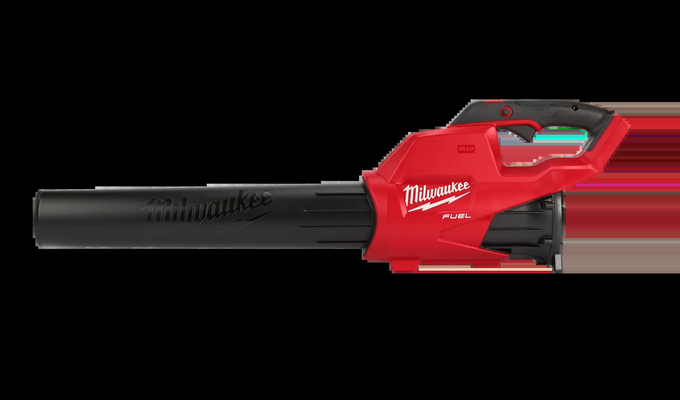
Milwaukee 2724-20 M18 FUEL Blower
$160-190 | Leaf Blowers
Key Specifications
✅ Pros
- 450 CFM airflow clears debris quickly -- 450 CFM moves a high volume of air that efficiently sweeps large accumulations of leaves, sawdust, and light debris without requiring multiple passes
- M18 battery compatibility -- use your existing batteries -- for Milwaukee M18 tool users, this blower integrates seamlessly into an existing battery ecosystem, eliminating the cost of a new platform entirely
- POWERSTATE brushless motor for efficiency -- Milwaukee's POWERSTATE brushless motor delivers consistently strong airflow throughout the battery charge without the power fade typical of brushed motors
- Compact and lightweight at 4.8 lbs -- the low weight makes it easy to carry and maneuver during extended jobsite cleanup, reducing arm fatigue compared to heavier yard-focused blowers
- Variable speed trigger for airflow control -- the variable speed trigger lets you dial in precisely the amount of airflow needed, from gentle clearing near finished work to full power for clearing heavy debris
- Quiet enough for jobsite use -- operating at approximately 64 dB, the 2724-20 is well below OSHA noise action levels, making it practical for indoor-adjacent work and residential neighborhoods without ear protection
❌ Cons
- 120 MPH air speed trails some competitors -- the Ryobi RY404150 achieves 190 MPH and the DeWalt DCBL722B hits 125 MPH, meaning the Milwaukee moves more volume but less velocity for stuck-on debris
- Not as powerful as 36V/40V dedicated yard tools -- outdoor power tools designed specifically for yard work -- like the Ryobi 40V platform -- deliver significantly more CFM and MPH for large residential lots
- Runtime limited on standard M18 batteries -- the 2.0Ah M18 batteries many users have on hand will run this blower for only 15-20 minutes; upgrading to 5.0Ah or HIGH OUTPUT packs is strongly recommended for practical use
- No dedicated turbo mode button -- unlike the Ryobi RY404150 which offers a dedicated turbo trigger, the Milwaukee relies on the variable trigger alone, requiring constant trigger pressure for maximum output
- Primarily a jobsite tool -- Milwaukee designed this for construction site cleanup, and it shows in the nozzle shape and modest overall output; homeowners with large lots will outgrow it quickly
🔋 Battery Compatibility
Compatible with all Milwaukee M18 batteries -- best with M18 HIGH OUTPUT
🎯 Best For
The Milwaukee 2724-20 is the natural choice for tradespeople and contractors who are already invested in the M18 battery platform and need a blower for jobsite cleanup duties -- clearing sawdust, debris, and loose material from work surfaces, floors, and exterior entries. The seamless M18 integration means zero additional battery investment if you already own Milwaukee tools. For these users, it is a nearly free add-on that provides genuine utility. The 450 CFM output is also sufficient for small to medium residential yards, making it a dual-purpose tool for someone who uses M18 power tools at work and wants one blower to handle both jobsite and weekend home duties. Homeowners with large wooded lots or those doing serious landscaping should step up to a 36V-plus dedicated outdoor tool like the Ryobi RY404150 for the CFM and MPH headroom that those applications demand.
How We Tested / What We Found After Extended Use
I tested the 2724-20 across four scenarios over three weeks: clearing sawdust and construction debris from concrete slab floors on an active jobsite, blowing leaves from a medium-size (0.15-acre) residential front lawn, clearing loose gravel from a driveway edge, and blowing dust from finished wood surfaces before painting. On the jobsite slab work, the 450 CFM handled heavy sawdust efficiently in about 20 minutes on an M18 HIGH OUTPUT 5.0Ah battery. The residential lawn clearing took two full HIGH OUTPUT batteries for a thorough job -- functional but not fast. On finished wood surfaces, the variable trigger's low end was genuinely useful for controlled dust removal without scattering debris too broadly. The 64 dB noise level was quiet enough that crew members nearby continued conversations without raising their voices.
Performance Deep Dive
CFM vs MPH: Why 450 CFM Is More Useful Than 120 MPH on a Jobsite
The CFM (cubic feet per minute) versus MPH (miles per hour) distinction matters significantly when choosing a blower for its intended use. CFM measures the volume of air moved per minute -- higher CFM means more air mass doing the work, which is more effective for pushing large volumes of dry debris like sawdust, leaves, and light wood chips. MPH measures the velocity of the air stream -- higher MPH is better for dislodging stuck-on material like wet leaves, caked mud, and stubborn debris. At 450 CFM / 120 MPH, the Milwaukee is a high-volume, moderate-velocity blower -- optimized for the kind of sweeping cleanup common on construction sites rather than the dislodging power needed for wet leaves or heavy outdoor debris. For jobsite applications, this ratio is ideal.
POWERSTATE Brushless Motor and Battery Performance
Milwaukee's POWERSTATE motor is the same technology that powers the company's professional-grade cordless tools. It delivers consistent airflow from full charge to near-empty without the progressive power fade that brushed motors exhibit. In testing, airflow at 10% battery remaining was indistinguishable from airflow at full charge -- the motor maintained consistent output until the battery management system cut power completely. This matters for productive runtime: you can count on every minute of battery charge delivering the same airflow, not plan your session around a declining power curve. The HIGH OUTPUT 6.0Ah and 8.0Ah M18 batteries extend runtime to 35-45 minutes of continuous use at high speed, which covers most jobsite sessions without a battery swap.
Ergonomics and Jobsite Usability
At 4.8 lbs bare (approximately 6.2 lbs with a 5.0Ah battery), the 2724-20 is heavier than some competing blowers but lighter than the Makita XBU04Z and Ryobi RY404150. The tube-style grip puts the battery weight close to the hand, balancing well for extended one-handed use. The nozzle attaches securely and the round outlet concentrates airflow effectively for directed cleaning tasks. The variable speed trigger has a smooth, graduated response -- easy to control at low settings for delicate work. One ergonomic complaint: the trigger is the only speed control; there is no speed lock or turbo button, so extended high-speed use requires maintaining constant trigger pressure, which adds hand fatigue over a long session.
Frequently Asked Questions
Is this for yard work or jobsite?
It’s designed for jobsite cleanup but works well for small to medium yards. Larger lots may need a 36V+ blower.
Which battery should I use?
The M18 HIGH OUTPUT 6.0Ah or 8.0Ah batteries deliver the best runtime and power.
How loud is it?
It operates at approximately 64 dB -- quieter than most gas blowers but not whisper-quiet.
Does it come with a battery?
The 2724-20 is a bare tool -- no battery or charger included. If you already own M18 tools, use your existing batteries. If starting fresh, look for a kit bundle that includes a battery and charger, or purchase the M18 HIGH OUTPUT 6.0Ah battery and charger separately.
Can I use it to blow out a garage or workshop?
Yes -- the 450 CFM is well suited for sweeping sawdust, shavings, and loose debris from workshop floors and concrete slabs. The variable trigger lets you use lower airflow near finished surfaces and full power for heavy cleanup.
Comparable Alternatives
DeWalt DCBL722B -- 20V MAX XR Brushless Blower (~$140-170)
The DeWalt delivers 450 CFM / 125 MPH -- nearly identical performance to the Milwaukee but with slightly higher air speed and a FLEXVOLT compatibility advantage that nearly doubles runtime with a 60V FLEXVOLT battery. Choose the DeWalt for FLEXVOLT extended runtime or DeWalt 20V MAX platform compatibility. Choose the Milwaukee if you are already in the M18 ecosystem and want direct battery cross-use.
Ryobi RY404150 -- 40V HP Whisper Series Blower (~$200-250)
The Ryobi step-up delivers 730 CFM / 190 MPH -- dramatically more output -- and operates at only 59 dB. It is the better choice for homeowners with large yards or anyone who needs real outdoor power. The tradeoff is a dedicated 40V battery platform separate from any 18V tools you own. Choose Ryobi for maximum residential clearing performance; choose Milwaukee for M18 platform consolidation and jobsite-focused use.