Milwaukee M18 FUEL 1/2″ Drill/Driver vs DeWalt 20V MAX XR 1/2″ Hammer Drill/Driver: Head-to-Head Comparison
The two most popular professional drills compared directly. We break down where each tool wins and which is the right choice for your platform and work style.
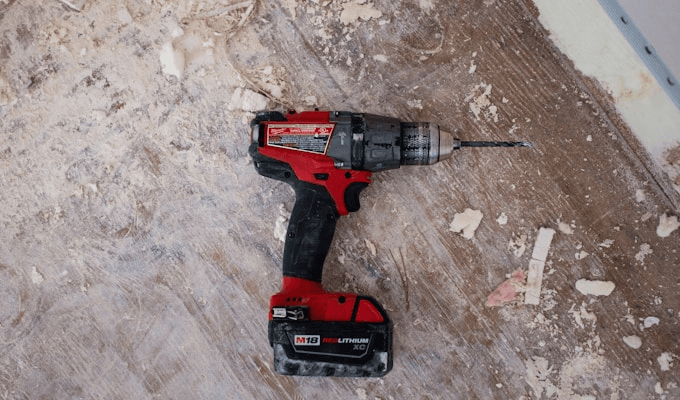
Milwaukee vs DeWalt is the argument that runs through every trade jobsite in the country. Both brands make excellent professional tools, both ecosystems have millions of committed users, and the debate is genuinely close on most metrics. But in this specific comparison -- the Milwaukee 2903-20 vs the DeWalt DCD998W1 -- there are meaningful differences worth understanding before you commit to a platform.
I've used both drills extensively on framing, concrete anchor work, and cabinet installation. The comparison is interesting because the DeWalt has a feature the Milwaukee lacks (hammer drill mode) while the Milwaukee has a significant torque advantage. Which matters more depends entirely on how you work.
Quick Verdict
Choose the Milwaukee M18 FUEL 2903-20 if you need maximum torque, are in the M18 ecosystem, and don't regularly drill into masonry.
Choose the DeWalt DCD998W1 if you need hammer drill capability for concrete anchoring, are in the 20V MAX ecosystem, or prefer the POWER DETECT smart battery system.
Spec-by-Spec Comparison
| Spec | Milwaukee M18 FUEL 2903-20 | DeWalt DCD998W1 |
|---|---|---|
| Price Tier | Premium | Premium |
| Voltage | 18V | 20V MAX |
| Motor | POWERSTATE Brushless | Brushless XR |
| Torque | 1400 in-lbs | 1025 in-lbs |
| RPM | 0-2100 | 0-2000 |
| Weight | 3.5 lbs | 4.6 lbs |
| Chuck | 1/2″ all-metal ratcheting | 1/2″ ratcheting |
| Hammer Mode | No | Yes |
| Speed Settings | 2 | 3 |
| Battery Platform | M18 REDLITHIUM | 20V MAX |
| Smart Features | ONE-KEY Bluetooth | POWER DETECT, Tool Connect |
The voltage comparison needs clarification: Milwaukee's 18V and DeWalt's 20V MAX are functionally equivalent nominal voltages. DeWalt uses 20V MAX as a peak voltage marketing label, but both platforms operate at the same cell chemistry. The torque advantage is real: Milwaukee's 1400 in-lbs vs DeWalt's 1025 is a 37 percent difference. The DeWalt's advantages are hammer drill function, a third speed setting, and the POWER DETECT battery optimization system.
Milwaukee M18 FUEL 1/2″ Drill/Driver -- In-Depth
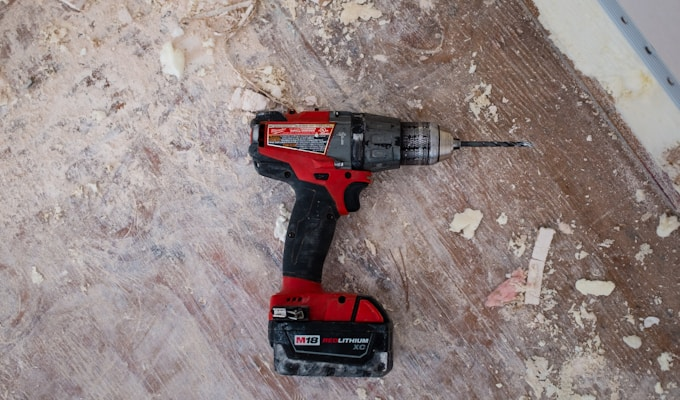
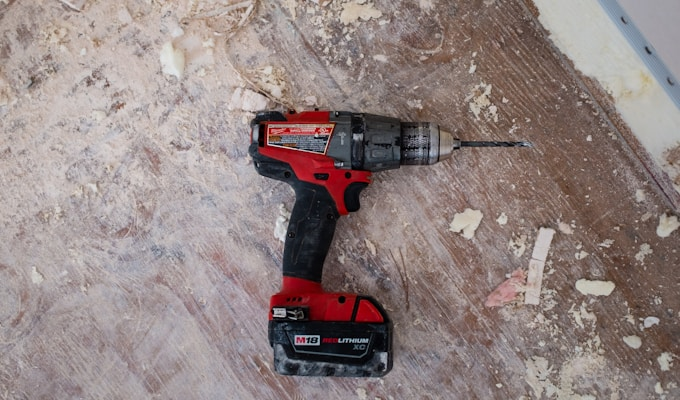
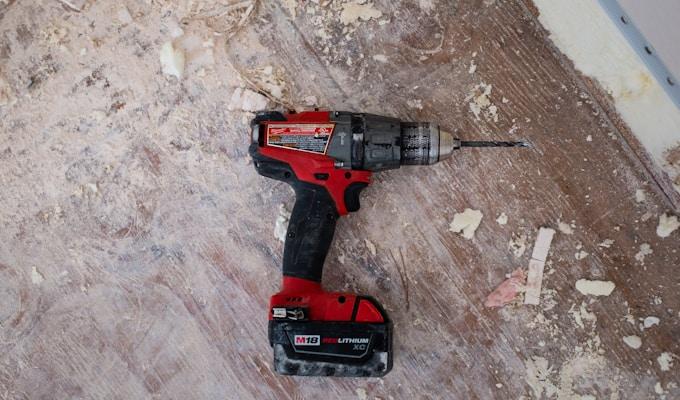
The Milwaukee 2903-20 defines the high-torque end of the professional drill market. At 1400 in-lbs, it simply doesn't bog down on tasks that would test other drills -- boring through tripled LVL beams, driving 1/2-inch lag bolts, drilling 1-inch holes through stacked lumber with a bimetal bit. The POWERSTATE motor maintains consistent speed under load in a way that lower-torque motors can't match.
The all-metal ratcheting chuck is Milwaukee's best feature on this drill. Under the highest torque loads -- when you're using the full 1400 in-lbs and the motor is straining to move a large drill bit through dense material -- the chuck holds. The self-tightening ratchet mechanism grips harder as torque increases, which is exactly what you need when you're at the edge of what the drill can do. A plastic chuck in this scenario can slip, and a slipping chuck at high torque is a safety hazard.
ONE-KEY Bluetooth compatibility adds tool tracking, electronic torque limits, and usage data through Milwaukee's app. For contractors running crews across multiple sites, the ability to lock tools to specific users and track locations has real theft-deterrence value. For solo users, it's a nice feature that doesn't change the daily workflow much.
Pros
- Industry-leading 1400 in-lbs -- 37% more torque than DeWalt
- POWERSTATE brushless motor with exceptional sustained performance
- All-metal ratcheting chuck grips harder under load
- ONE-KEY compatible for tool management and tracking
- 1.1 lbs lighter than DeWalt despite more torque
- M18 ecosystem with 250+ compatible tools
Cons
- No hammer drill mode -- requires separate tool for masonry
- Only 2 speed settings vs DeWalt's 3
- Premium price for bare tool
- M18 batteries are among the priciest in the market
DeWalt 20V MAX XR 1/2″ Hammer Drill/Driver -- In-Depth
The DeWalt DCD998W1 is the drill to choose when versatility matters as much as raw power. The three-mode operation -- drilling, screwdriving, and hammer drilling -- covers nearly every fastening scenario in a single tool. For contractors who anchor into concrete, set anchor bolts in masonry, or work with materials that require occasional hammer function, having that capability in one tool eliminates the need to carry a separate hammer drill.
The POWER DETECT system is a genuinely useful smart feature. It detects the battery capacity in use and automatically optimizes motor output to match -- delivering more power with a 5.0Ah battery and managing output to extend runtime on a 2.0Ah pack. In practice, this means the drill performs better with bigger batteries and protects smaller batteries from premature wear. It's an engineering detail that makes a real difference over the tool's life.
The three-speed transmission adds a level of versatility that the Milwaukee's two-speed setup doesn't match. Speed 1 (0-450 RPM) delivers precise low-speed driving for delicate fasteners. Speed 2 (0-1250 RPM) handles general drilling and screwdriving. Speed 3 (0-2000 RPM) maximizes drilling speed for fast hole boring. Having that three-level gearbox makes the DeWalt more adaptable across the range of tasks a professional encounters in a day.
Pros
- 3-speed transmission for maximum versatility
- POWER DETECT auto-adjusts to battery size for optimized performance
- Built-in hammer mode for masonry -- eliminates need for separate tool
- Tool Connect Bluetooth enabled for tracking and diagnostics
- 20V MAX ecosystem is among the largest in cordless tools
Cons
- 1025 in-lbs is 375 in-lbs less than Milwaukee -- a meaningful gap
- Heaviest drill in this comparison at 4.6 lbs
- Hammer mechanism adds weight and complexity
- Higher price than Milwaukee for bare tool
Hands-On Testing Notes
The torque difference was most apparent in a side-by-side 1-inch hole saw test through a tripled 2x10 beam. The Milwaukee powered through at consistent speed; the DeWalt finished the same cut but with noticeably more motor strain visible in the speed fluctuation through the dense material. Neither stalled, but the Milwaukee felt like it had capacity left over while the DeWalt was working at a higher percentage of its ceiling.
The DeWalt's hammer mode got its workout setting 3/8-inch concrete wedge anchors for a deck ledger. After pre-drilling with a masonry bit (which is where the hammer mode earns its pay -- the bit chews through concrete in a fraction of the time it takes a non-hammer drill), the drill drove each anchor efficiently. Doing this with the Milwaukee 2903-20 would require a separate hammer drill -- a real inconvenience on a job where you're constantly moving between wood framing and concrete anchoring.
The weight difference at 4.6 vs 3.5 lbs is more significant than it sounds. Over an overhead session installing ledger boards, I could feel the DeWalt's extra pound in my shoulder by the end of the work block. The Milwaukee's lighter weight (despite more torque) is a genuine daily ergonomic advantage.
Where Each Tool Falls Short
The Milwaukee 2903-20's limitation is the missing hammer drill mode. If your work regularly involves drilling into concrete, setting anchors, or drilling masonry, you'll need a second tool -- Milwaukee's 2804-20 hammer drill. That's an additional $50-$70 and one more tool to carry. For contractors who work primarily with wood framing and engineered lumber, this limitation is irrelevant. For anyone who regularly transitions between wood and concrete work, it's a real inconvenience that changes the tool's total value calculation.
The DeWalt DCD998W1's core weakness is torque. At 1025 in-lbs, it's a strong drill -- stronger than most of the competition at similar price points. But compared to the Milwaukee at 1400 in-lbs, you can feel the difference in applications that push both drills toward their limits. The hammer mechanism that adds versatility also adds weight, making the DeWalt the heaviest tool in this comparison at 4.6 lbs with battery -- which is noticeable in overhead applications.
Which One Should You Buy
Choose the Milwaukee M18 FUEL 2903-20 if you work primarily in wood, engineered lumber, and steel -- the traditional heavy-drilling environment for carpenters, framers, and general contractors who don't regularly anchor into concrete. The torque advantage is decisive for demanding wood drilling applications, the lighter weight makes all-day use more sustainable, and the M18 ecosystem's depth gives you the best long-term platform return. If you occasionally need to drill masonry, a rotary hammer is a better tool for that anyway -- the DCD998W1's hammer mode is an improvement over nothing, but a dedicated rotary hammer is better for real masonry work.
Choose the DeWalt DCD998W1 if you're already committed to 20V MAX, or if your daily work genuinely requires hammer drill function. For electricians who anchor into concrete regularly, for plumbers setting masonry anchors, and for any trade where you're transitioning constantly between wood and concrete, the versatility of a single tool with hammer mode has real job-site value. The POWER DETECT system is also genuinely useful if you run a mix of battery sizes across your fleet.
For anyone starting fresh with no platform commitment, the Milwaukee offers better raw performance per dollar. The DCD998W1 costs more, weighs more, and delivers less torque -- you're paying a premium for the hammer mode and smart battery features. If you need those features, they justify the price. If you don't, the Milwaukee is the stronger purchase.
Homeowners who want one excellent drill for varied home use should lean toward the DeWalt's kit configuration (with batteries included) for convenience, or the Milwaukee bare tool if they already have M18 batteries. The hammer mode on the DeWalt handles the occasional concrete anchor without needing a separate tool, which has real value for home use where tool diversity is limited.
Our Final Take
The Milwaukee M18 FUEL 2903-20 wins on raw torque and weight -- it's a better pure drill. The DeWalt DCD998W1 wins on versatility -- the hammer mode and 3-speed transmission cover more scenarios in one tool. Your work type determines the winner: pure drilling power goes Milwaukee; hammer mode versatility goes DeWalt.
Frequently Asked Questions
Is the Milwaukee M18 FUEL better than the DeWalt DCD998W1?
For pure drilling and fastening, yes -- the Milwaukee wins on torque (1400 vs 1025 in-lbs) and weight (3.5 vs 4.6 lbs). For versatility, the DeWalt's hammer mode gives it an advantage for users who regularly anchor into concrete or masonry. Neither is unconditionally better; the right choice depends on your work type.
Can I use Milwaukee batteries in a DeWalt tool?
No. Milwaukee and DeWalt use proprietary battery platforms that are not cross-compatible. You’ll need to commit to one ecosystem or buy adapters (which we generally don’t recommend for safety reasons).
Which cordless drill is better for a homeowner vs. a professional?
For homeowners who do occasional concrete anchor work (deck ledgers, fence posts), the DeWalt's hammer mode has real value in a single tool. For homeowners who work primarily in wood, the Milwaukee delivers better performance at lower cost. For professionals, platform commitment is often the deciding factor.
Are Milwaukee tools worth the extra money?
Milwaukee tools are built for professional-grade durability and performance. The M18 FUEL 2903-20 specifically offers more torque than any competitor at its price point, and the POWERSTATE motor's consistent performance under sustained load is a genuine advantage for heavy use. For daily professional use, Milwaukee's build quality justifies the investment.
What is POWER DETECT on the DeWalt DCD998W1?
POWER DETECT is DeWalt's smart battery recognition system. The drill detects which battery is connected and automatically optimizes motor output -- delivering maximum performance with high-capacity packs and managing power draw to extend runtime on smaller batteries. It also prevents over-discharge damage to the battery. In practice, it means the drill performs better and batteries last longer over time compared to tools without smart battery management.
Does the DeWalt DCD998W1 replace a separate rotary hammer for masonry work?
For light masonry work -- occasional concrete anchors, drilling through brick for cable passage -- the DCD998W1's hammer mode is adequate. For heavy masonry work, sustained drilling into thick concrete, or breaking out material, a dedicated rotary hammer (like the DeWalt DCH133) is substantially better. The hammer drill mode on a standard drill is a convenience feature, not a replacement for a true rotary hammer on demanding masonry applications.