The biggest mistake first-time buyers make is choosing the same drill a professional contractor would use. That thing is loud, heavy, and has enough torque to strip every screw you touch for the first six months. I have seen it happen dozens of times -- someone buys a full-size 1,000 in-lb beast because it got good reviews, and then the drill lives in a closet because it is intimidating to use.
Your first cordless drill should feel comfortable, not powerful. You want something light enough to hold above your head for five minutes, forgiving enough that a small slip does not wreck the project, and simple enough that you are not hunting through menus just to hang a shelf.
I tested five drills specifically against beginner criteria: weight under 4 lbs bare, intuitive clutch settings, clear speed triggers, and enough battery life to get through a reasonable Saturday project. Here is what I found.
Quick Comparison: Best Beginner Cordless Drills 2026
| Drill | Voltage | Weight (bare) | Max Torque | Best For | Price |
|---|---|---|---|---|---|
| DeWalt DCD777C2 | 20V MAX | 2.3 lbs | 340 in-lbs | Best Overall | $$ |
| Ryobi PBLDD01K | 18V ONE+ HP | 3.0 lbs | 750 in-lbs | Best Budget | $ |
| Makita XFD14Z | 18V LXT | 3.5 lbs | 550 in-lbs | Best Lightweight | $$ |
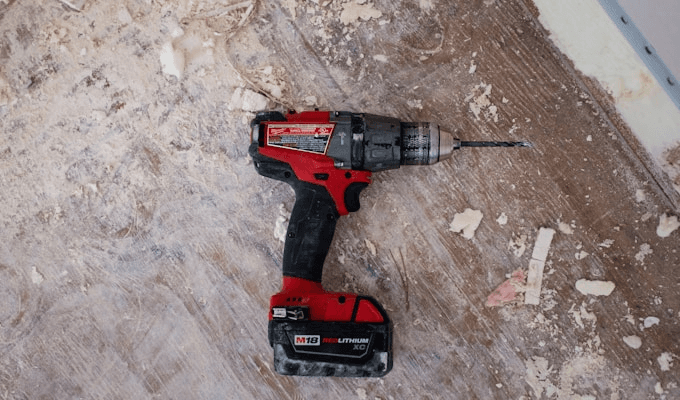
| Milwaukee 2801-20 | 18V M18 | 2.9 lbs | 500 in-lbs | Best Ecosystem | $$ |
| Black+Decker BDCDD12C | 12V MAX | 2.0 lbs | 265 in-lbs | Ultra-Light | $ |
1. DeWalt DCD777C2 20V MAX Compact -- Best Overall for Beginners
Why It Wins for Beginners
The DCD777C2 is the drill I recommend to almost everyone buying their first one. At 2.3 lbs bare, it is noticeably lighter than full-size drills -- you can hold it one-handed without feeling like your wrist is going to give out on a ceiling install. The brushless motor runs cooler and gives better battery life than the brushed motors in most budget drills, which means you can get through a full afternoon of work on a single 1.3Ah battery.
What I really like for beginners is the 15-position clutch. The detents are clearly spaced and the numbers are large enough to actually read while you are kneeling on a floor. Set it to 5 or 6 for standard drywall screws, bump it to 10-12 for structural work -- you will not strip anything once you figure out your starting point.
The two-speed gearbox is also well-calibrated. Speed 1 (0-450 RPM) is slow enough that you can feel exactly what the screw is doing as it seats. Speed 2 (0-1,500 RPM) handles drilling through wood without any vibration or chatter. Both modes have a genuinely useful range, unlike cheaper drills where Speed 1 is painfully slow and Speed 2 is either too much or not enough.
The kit comes with two 1.3Ah batteries and a compact charger. The charger is small enough to fit in a kitchen drawer, which matters when you are not yet at the stage of having a dedicated tool charging station in your garage.
Pros
- 2.3 lbs -- lightest 20V MAX drill DeWalt makes
- Brushless motor for better runtime and longer tool life
- 15-position clutch with readable detents
- Two-speed gearbox with genuinely useful ranges
- Comes with two batteries and compact charger
- 20V MAX ecosystem -- easily upgrades to more capable tools
Cons
- 340 in-lbs max torque is lower than full-size models (not a problem for beginners)
- Small batteries drain faster on demanding jobs
- LED light is dim compared to newer models
If you outgrow the DCD777C2, the natural upgrade is the DeWalt DCD999B, which runs the same 20V MAX batteries and delivers 1,025 in-lbs of torque when you need it.
2. Ryobi PBLDD01K ONE+ HP -- Best Budget Pick
Why It Wins for Beginners
If your goal is to spend the least amount of money on a drill that will actually get the job done, the Ryobi PBLDD01K is the right answer. The ONE+ HP brushless motor gives it more punch than you would expect from a budget tool -- 750 in-lbs is more than enough for hanging pictures, assembling furniture, and most light construction work around the house.
The real advantage here is the Ryobi ONE+ ecosystem. Over 300 tools run on the same 18V ONE+ battery, from circular saws to string trimmers to shop lights. If you ever buy a second Ryobi tool -- and most people eventually do -- your batteries already work with it. For someone just starting out, building into an affordable ecosystem makes a lot more sense than buying a premium brand battery platform you will never fully use.
The drill itself is straightforward. The clutch settings are clear, the trigger has good tactile feedback, and the chuck accepts standard accessories without any adapter. It is not the lightest drill on this list at 3.0 lbs, but the balance is good and it never feels unwieldy.
The PBLDD01K comes as a kit with two batteries, a charger, and a case -- reasonable value at under $80 street price. One note: the included batteries are lower capacity, so you will want to grab a spare if you are planning a longer project.
Pros
- Under $80 kit price -- most affordable brushless option
- 750 in-lbs covers most beginner and DIY tasks
- ONE+ ecosystem -- 300+ compatible tools
- Two batteries and case included
- Brushless motor for better efficiency than budget brushed alternatives
Cons
- Included batteries are low capacity
- Slightly heavier than compact premium options
- ONE+ platform tops out at 18V -- limited upgrade path for heavy use
3. Makita XFD14Z 18V LXT -- Best Lightweight Option
Why It Wins for Beginners
Makita does not make a lot of noise in marketing, but they make some of the most refined tools in the category. The XFD14Z is a good example -- compact, quiet, and smooth in a way that makes you feel more in control than the specs suggest.
At 3.5 lbs with a battery, it is not the lightest drill on this list, but the balance point is excellent. The weight sits close to your hand rather than out at the chuck, which reduces wrist fatigue on overhead work. After an hour of installing cabinet hardware, that balance difference is noticeable.
The 18V LXT platform is Makita's flagship battery line -- the largest in the industry with over 275 compatible tools. If you eventually buy into outdoor power equipment, woodworking tools, or jobsite accessories, Makita LXT batteries cover more ground than any competing platform. The XFD14Z is a good entry point into that ecosystem.
The clutch on the XFD14Z has 21 positions, which is more granular than most beginner drills. You will likely use positions 6 through 12 for 90% of tasks, but having the extra settings means you will rarely strip a screw even in soft materials like pine.
Note: the XFD14Z is sold as a bare tool -- you will need to add a battery and charger, or buy the XFD14T kit version which includes both.
Pros
- Excellent weight distribution -- lower fatigue on overhead work
- 21-position clutch for precise screw depth control
- Makita LXT platform -- largest cordless ecosystem available
- Quiet brushless motor with minimal vibration
- Compact enough to fit in tight spaces
Cons
- Sold bare tool -- battery and charger sold separately
- 550 in-lbs limits heavy construction use
- LXT batteries cost more than Ryobi or Black+Decker
4. Milwaukee 2801-20 M18 Compact -- Best for Future Upgrades
Why It Wins for Beginners
The Milwaukee 2801-20 is the entry point into the M18 platform, and M18 is the ecosystem worth investing in if you ever plan to get serious about tools. Over 250 M18 tools exist -- including high-output batteries, the industry-best M18 FUEL line, and a full outdoor tool range. Buying the 2801-20 now means any battery you buy today will still work with your tools five or ten years from now.
The drill itself punches above what you would expect from a compact tool. At 500 in-lbs and 2.9 lbs, it handles everything a beginner would reasonably ask of it -- cabinet assembly, light framing, deck screws, anchor installation. The two-speed gearbox is smooth and the clutch feedback is crisp.
What Milwaukee does especially well is ergonomics. The grip is one of the most comfortable in the compact drill category, and the trigger travel is well-tuned -- easy to feather at low speed for delicate work, but still responsive at full speed. Beginners will benefit from that trigger feel immediately.
The 2801-20 is a bare tool. The M18 FUEL 2904-20 (our pick in the full cordless drill roundup) runs the same batteries if you want to see where the platform goes at the top end.
Pros
- Best ergonomics and trigger feel in the compact category
- M18 ecosystem -- 250+ tools, industry-leading battery technology
- 500 in-lbs handles most DIY and light construction tasks
- REDLINK circuit protection prevents damage from overloading
- 2.9 lbs -- genuinely lightweight for an 18V tool
Cons
- Bare tool only -- starter kit versions cost more
- M18 batteries are more expensive than Ryobi alternatives
- Not the cheapest entry point on this list
5. Black+Decker BDCDD12C 12V MAX -- Best Ultra-Lightweight
Why It Wins for Beginners
Not everyone needs 20V of power. If you are assembling flat-pack furniture, hanging pictures, tightening hardware, or doing light repairs around the house, a 12V drill is all you will ever need -- and at 2.0 lbs, the BDCDD12C is the lightest drill on this list by a significant margin.
The compact size is the standout feature. The drill fits into spaces a full-size model cannot reach -- inside cabinet boxes, between studs, in cramped utility closets. For apartment dwellers, renters, or anyone doing occasional light work, this is honestly the most practical option.
The 265 in-lb torque is sufficient for softwood screws up to about 2.5 inches, most hardware installation, and any furniture assembly task. It will struggle with longer lag screws or repeated heavy driving -- for that, step up to 18V or 20V. But for the tasks most beginners actually face in the first year of tool ownership, the BDCDD12C covers the ground well.
It comes as a kit with two 12V batteries, a charger, and a case. At under $50, it is the lowest-cost entry point on this list and a smart option if you are not sure how much you will actually use a drill.
Pros
- 2.0 lbs -- lightest option on this list
- Kit includes two batteries and charger
- Under $50 -- lowest-cost entry point
- Compact size fits in tight spaces other drills cannot reach
- Simple controls -- no learning curve
Cons
- 265 in-lbs limits heavier tasks like lag screws or structural work
- 12V ecosystem is small -- few compatible tools
- Not a long-term investment platform
What to Look For in a Beginner Drill
There are four things that matter most when you are choosing your first drill, and none of them are maximum torque.
- Weight under 4 lbs: Most beginners underestimate how much weight matters until they are holding the drill overhead or doing repeated work for an hour. Anything over 4 lbs bare starts to fatigue your wrist on extended projects. All five picks above stay under that threshold.
- Clutch with readable markings: The clutch controls how much torque is applied before the drill disengages -- it is what prevents you from stripping every screw you touch. You want a clutch with at least 15 settings and numbers large enough to see without reading glasses.
- Two-speed gearbox: Speed 1 for screwdriving and delicate drilling, Speed 2 for faster hole drilling. Drills with only one speed either go too fast for screws or too slow for drilling -- two speeds give you the right tool for the job each time.
- Battery ecosystem: Even if you only buy one tool today, buying into the right ecosystem saves money later. If you think you might eventually get a circular saw, jigsaw, or string trimmer, spend a little more now to get into a platform where those tools exist.
Which Battery Platform Should You Choose?
This is the question beginners underestimate most. The battery platform you choose today determines what tools you can buy in the future without adding another charger and set of batteries.
DeWalt 20V MAX is the best-balanced choice for most first-time buyers. Large tool selection, batteries available everywhere, and the platform has clear upgrade paths from compact to pro-grade tools. The DCD777C2 gets you started without overpaying.
Milwaukee M18 is the right choice if you take tools seriously or plan to eventually use them for paid projects. The M18 FUEL line is the best-performing 18V platform available, and the battery technology is ahead of competitors. The 2801-20 is an affordable entry point into a serious ecosystem.
Makita LXT is ideal if you see yourself eventually owning a lot of tools -- the LXT line is the widest platform available and includes excellent woodworking tools that other brands do not match. More expensive to start, but broad coverage over time.
Ryobi ONE+ is the right call if budget is the main concern. The ONE+ ecosystem is enormous and cheap, and the PBLDD01K performs well above what the price suggests. The tradeoff is that ONE+ tools do not scale as well into professional-grade performance as Milwaukee or DeWalt.
Common Beginner Mistakes to Avoid
- Setting the clutch too high on your first screwdriving job. Start at setting 4 or 5, drive a test screw, and adjust upward until the drill stops just as the screw seats. A minute of testing prevents stripped screw heads across an entire project.
- Using Speed 2 for screwdriving. Speed 2 is for drilling holes, not driving screws. The high RPM makes it nearly impossible to control screw depth, especially in soft materials.
- Running the battery completely dead before charging. Lithium-ion batteries last longer when you charge them before they drop below 20%. Most kits include two batteries for a reason -- swap when the indicator shows one bar remaining.
- Skipping a pilot hole in hardwood. A drill is only half the job -- a pilot hole prevents splitting and makes driving screws significantly easier in oak, maple, or any dense wood.
Final Verdict
For most beginners, the DeWalt DCD777C2 is the right drill. It is light, capable, and runs on the same 20V MAX batteries as DeWalt's most powerful tools -- so your investment grows with you. If you are on a tight budget, the Ryobi PBLDD01K is the honest value pick, and the ONE+ ecosystem gives you plenty of room to expand. If you just need something light for occasional home tasks, the Black+Decker BDCDD12C does the job at a price that makes it easy to commit to.
Whatever you choose, the most important thing is getting something you will actually pick up and use. A light, easy drill that gets used every weekend will teach you more than a high-spec tool that lives in the case because it feels like too much work to pull out.
When you are ready to step up, see our full cordless drill roundup for our top picks across all experience levels and budgets. Once you have the basics down, our best drill for home DIY guide covers the compact models best suited to shelving, furniture assembly, and general repairs. And if you find yourself driving a lot of deck screws or lag bolts, read our impact driver vs drill comparison -- it explains exactly when a drill holds you back and an impact driver takes over. Most major brands sell drill and impact driver combo kits that bundle both tools at a significant discount over buying them separately.
Related Articles
- Best Cordless Drills 2026 -- Full Roundup
- Best Drill for Hanging Shelves and Mounting TVs
- Best Drill for Concrete and Masonry
- Best Impact Drivers 2026
- Best Power Tools for Beginners
FAQ
What is the best cordless drill for a first-time buyer?
The Ryobi PBLDD01K ONE+ HP is our top pick for beginners -- it is lightweight, easy to control, comes with two batteries, and opens the door to the entire Ryobi ONE+ ecosystem at an affordable price. If you want to spend a bit more for a name with broader appeal, the DeWalt DCD708C2 is an excellent step up.
Do I need a brushless motor in my first drill?
Brushless motors run cooler, last longer, and are more efficient than brushed motors -- but they also cost more. For a beginner doing occasional DIY tasks, a brushed drill will work fine. If you plan to use the drill regularly or want it to last many years, the extra cost of brushless is worth it. All of our top beginner picks are brushless.
What drill features are most important for beginners?
Look for a lightweight design under 4 pounds, a clutch with multiple settings to prevent stripping screws, variable speed trigger for control, and an LED work light. A two-speed gearbox is also helpful -- low speed for driving screws, high speed for drilling holes. Avoid heavy professional-grade models with excessive torque until you build confidence.
How long does a cordless drill battery last?
Battery life depends on the task and battery capacity. A 2.0Ah battery typically handles 30 to 60 minutes of moderate use. For most beginners doing weekend projects, one battery charge is plenty. If you expect longer work sessions, look for a kit that includes two batteries or consider a 4.0Ah option for extended runtime.