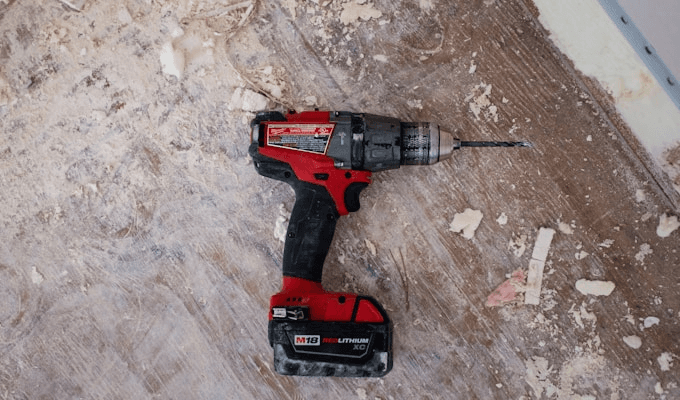
Hanging shelves and mounting TVs sounds simple, but it's where cheap drills reveal their weaknesses. Drive a screw into a drywall anchor at full torque and you'll strip it instantly. Use a drill that's too bulky and you can't see your mark. Use one without enough clutch settings and you'll either under-drive or blow through. The right drill for this work is compact, has a sensitive clutch, and gives you precise speed control at low RPM.
These five drills handle that specific job better than anything else at their price points. We're also including everything you need to know to get it right — not just the tool, but the settings and technique.
Top 5 Drills for Hanging Shelves and Mounting TVs
| Model | Clutch Settings | Max Torque | Length | Weight | Best For | Price |
|---|---|---|---|---|---|---|
| DeWalt DCD777C2 | 15+1 | 340 in-lbs | 6.9" | 2.59 lbs | Best overall compact | ~$129 kit |
| Milwaukee 2801-21P | 15+1 | 500 in-lbs | 7.0" | 2.8 lbs | Best clutch precision | ~$149 kit |
| Makita XFD10R | 21+1 | 480 in-lbs | 7.1" | 3.1 lbs | Most clutch settings | ~$149 kit |
| Ryobi PBLDD01K | 24+1 | 500 in-lbs | 7.4" | 3.6 lbs | Best value | ~$99 kit |
| Black+Decker BDCDD120C | 11+1 | 280 in-lbs | 7.3" | 2.1 lbs | Lightest / lightest users | ~$49 kit |
Our Picks
#1 — DeWalt DCD777C2: Best Overall for Home Use
The DCD777C2 is DeWalt's compact brushless drill and it's the right tool for this exact use case. At 6.9" long and 2.59 lbs with battery, it fits into tight spaces between wall studs and gives you a clear sightline to your mark. The 15-position clutch is well-tuned — position 5-8 is the sweet spot for most drywall anchors, and you can feel it disengage cleanly without camming out.
The kit comes with two 1.3Ah batteries and a charger. Runtime is perfectly adequate for household projects — you'll run out of screws before you run out of battery. The 2-speed gearbox lets you run low RPM for precision driving without hunting for a variable trigger sweet spot.
- Best for: First-time buyers and homeowners who want a complete reliable kit
- Limitation: 340 in-lbs max torque means it's not for heavy structural work — it's calibrated for light to medium applications, which is exactly right here
#2 — Milwaukee 2801-21P: Best Clutch Feel
Milwaukee's clutch mechanism on the M18 Compact Brushless drill (2801-21P) is one of the best we've tested for delicate work. The detents are firm and distinct — you can reliably dial to the same setting without guessing. For TV mounting into studs (where you want high torque) versus driving anchors into drywall (where you want low torque), swapping clutch positions is fast and accurate.
The REDLINK motor management prevents over-torquing on the driver side even when you're close to the limit. At 2.8 lbs with battery, it's comfortable for overhead work, which matters when you're mounting a TV mount at eye level or above.
- Best for: Users who want the most precise clutch control, especially for mixed wall-type work (studs, anchors, masonry)
- Limitation: Premium price; if you don't already own M18 batteries, startup cost is high
#3 — Makita XFD10R: Most Clutch Settings (21 Positions)
The XFD10R's 21-position clutch gives you finer adjustment than any other drill on this list. If you're doing a mix of work — 3/16" toggle bolts into drywall, 1/4-20 machine screws into a metal stud track, and #10 wood screws into a stud — you can dial each setting precisely. Most users won't use all 21 positions, but the fine-grained control is genuinely useful when material types vary.
Makita's compact drills have a reputation for being slightly noisier than Milwaukee equivalents, and the XFD10R is no exception, but performance is excellent and build quality is characteristically solid.
- Best for: Methodical users who want maximum clutch granularity and are already in the Makita 18V ecosystem
#4 — Ryobi PBLDD01K: Best Value
The Ryobi PBLDD01K brushless kit with two batteries and charger costs $99 and delivers real performance. The 24-position clutch is the highest count on this list and the settings are usable — you'll find the right one quickly. For the vast majority of hanging and mounting tasks a homeowner does, this drill is fully capable.
It's slightly heavier than the DeWalt and Milwaukee options (3.6 lbs), which matters more in overhead work. But if you're mounting a TV at a comfortable height or hanging shelf brackets, the extra weight isn't a problem. Excellent choice if you're building out a Ryobi ONE+ tool collection.
- Best for: Budget-conscious buyers and Ryobi ONE+ platform users
#5 — Black+Decker BDCDD120C: Best for Very Light Use
At $49 with battery and charger, and just 2.1 lbs, the BDCDD120C is the lightest, cheapest option here. If you own an apartment, are hanging picture frames, or do this work once or twice a year, it's all you need. The 11-position clutch is simpler but adequate for drywall anchors. Don't expect it to drive large lag bolts or handle anything structural — it's not built for that. For its stated purpose, it works fine.
Black+Decker BDCDD120C 20V Drill Kit on AmazonWhat to Look for When Buying
Clutch Position Count
More clutch positions = more fine-tuned control. For shelf hanging and TV mounting specifically, you want at least 15 positions. Less than that and you'll be guessing between "too loose" and "stripped anchor." The exact number matters less than how well the positions are spaced — test by driving a few screws at different settings before committing to a job.
Compact Length
Anything over 8" gets awkward near walls and in tight spaces. All five drills on this list are under 7.5". A full-size drill can work, but you'll be fighting geometry instead of focusing on placement.
Low-Speed Precision
First gear (low range) should feel smooth and controllable. A drill that jumps at slow trigger pulls will strip anchors. Brushless motors typically have better slow-speed control than brushed motors at the same price point.
Technique That Actually Matters
The right drill only does half the job. A few technique points that prevent most common failures:
- Pilot holes first. For drywall anchors, drill a pilot hole at the anchor's specified bit size — too small and the anchor won't seat, too large and it won't grip. Most anchor packaging specifies the correct bit.
- Set clutch low and go up. Start with clutch at position 3-5 and drive a test screw into scrap. Increase until you get full drive without cam-out. Write that number down for the session.
- Use a bubble level on TV mounts. Pre-drill all mounting points before driving any hardware. Getting everything positioned and level before you're locked in saves redrilling.
- Into studs vs. anchors. Into a stud, you can use higher clutch settings. Into a drywall anchor, stay low. The anchor can't take the same torque the stud can.
Related Articles
- Best Cordless Drills 2026: Full Comparison
- Best Drill for DIY Projects 2026
- Impact Driver vs Drill -- Which Do You Need?
- How to Choose the Right Drill Bit
- DeWalt vs Milwaukee: Which Platform Wins?
- Best Cordless Tool Combo Kits 2026
FAQ
What drill bit do I use for drywall anchors?
Check the anchor packaging — it specifies the exact bit size. Typically a 3/16" or 1/4" bit for common plastic expansion anchors, and a smaller bit for self-drilling toggle bolts. Drilling the wrong size is the most common reason anchors fail to grip.
Do I need a hammer drill to mount a TV?
Not for wood studs or drywall. If you're mounting into brick, concrete, or masonry (e.g., a basement wall), yes — a hammer drill is necessary for masonry anchors. For standard interior walls, a standard brushless drill is all you need.
Can I use an impact driver to hang shelves?
Only for driving screws into studs, not for drywall anchors. Impact drivers don't have a clutch — they'll rip through a drywall anchor in a second. For anchor work, always use a drill with a properly set clutch.
How much torque do I need for hanging shelves?
Less than you think. 200-300 in-lbs is plenty for drywall anchors and wood screws into studs. The drills on this list range from 280 to 500 in-lbs — all are more than adequate. Clutch setting matters far more than maximum torque for this application.
Is a brushless drill worth it for occasional use?
Yes, for two reasons: better low-speed control (critical for precise clutch work) and longer battery runtime between charges. Brushless drills also last significantly longer under regular use. The price premium is $20-40 over comparable brushed models and worth it even for occasional users.