DeWalt vs Milwaukee: The Ultimate Power Tool Showdown
If you’ve spent any time shopping for power tools, you’ve probably stood in the aisle wondering whether to go with DeWalt or Milwaukee. Both brands dominate the market, both have loyal followings, and both make genuinely excellent tools. But which one is actually better for your needs?
After years of testing tools in real-world conditions, we’ve got the data to answer that question. This isn’t a brand loyalty debate—it’s a straight comparison of what each company does well and where they fall short.
Quick Comparison Table
| Factor | DeWalt | Milwaukee |
|---|---|---|
| Battery Ecosystem | 20V platform (XR series) | M18, M12 dual platform |
| Drill Power | Strong across mid-range | Excellent, especially high-torque |
| Impact Drivers | Reliable, good value | Industry-leading performance |
| Circular Saws | Excellent quality | Strong but fewer options |
| Angle Grinders | Good selection | Premium focus |
| Price Entry Point | $99-150 for basic tools | $150-200 for basic tools |
| Professional Use | Extremely popular | Growing fast on job sites |
| DIY-Friendly | Yes, good starter kits | Yes, but pricier |
| Warranty | 3 years (some 6 years) | 3-5 years depending on line |
| Availability | Excellent everywhere | Good, slightly less selection |
Brand History and Market Position
DeWalt is older (since 1924) and has built massive market penetration. They’re everywhere—every big box store, every contractor’s truck, every rental counter. Their 20V platform has been their backbone for over a decade, giving them incredible inventory depth.
Milwaukee went all-in on professional-grade power tools and it paid off. Starting with the M18 (18V) platform in 2007 and adding the M12 (12V) compact line in 2012, they’ve positioned themselves as the premium option. Their approach is: build tools for professionals first, make them so good that DIYers want them too.
This matters because it shapes every comparison below.
Drilling and Fastening Performance
DeWalt’s Approach: Their 20V XR line delivers solid performance at accessible price points. The DeWalt DCD777C2 is a legitimate entry-level drill that works fine for light home projects. Their mid-range drills offer good balance between power and cost. DeWalt’s flagship is the DCD999B FLEXVOLT Advantage, which draws extra power from 60V batteries — a meaningful edge for contractors drilling masonry or driving long lag bolts.
Milwaukee’s Approach: They don’t really have a “basic” drill. Their entry point is higher quality. The Milwaukee M18 compact drill-drivers hit harder and feel more professional out of the box. If you’re buying Milwaukee, you’re getting professional-grade engineering.
For general drilling and driving in wood, drywall, and light materials, both brands work fine. DeWalt edges ahead on value. Milwaukee wins if you need to punch through tougher materials or want that premium feel. Our best cordless drills 2026 roundup ranks both brands head-to-head across 7 models with real-world test data.
If you’re looking for a solid starter drill, check out our full guide on cordless drills to understand what specs actually matter.
Impact Drivers: A Milwaukee Stronghold
This is where the gap widens. Milwaukee impact drivers are legitimately superior in sustained torque and efficiency. The M18 line consistently outperforms DeWalt’s comparable models.
Why? Milwaukee’s motor design and gear ratio give them better rotational force without the noise and vibration that makes DeWalt drivers fatiguing to use all day. If you’re driving 3.5-inch fasteners into heavy lumber or deck boards, Milwaukee’s impact drivers make the job easier.
DeWalt’s impact drivers aren’t bad—they work fine for most projects. But if you’re working professionally or doing extensive fastening work, Milwaukee pulls ahead.
Read more about what separates good impact drivers from great ones in our detailed guide.
Cutting Tools: DeWalt Territory
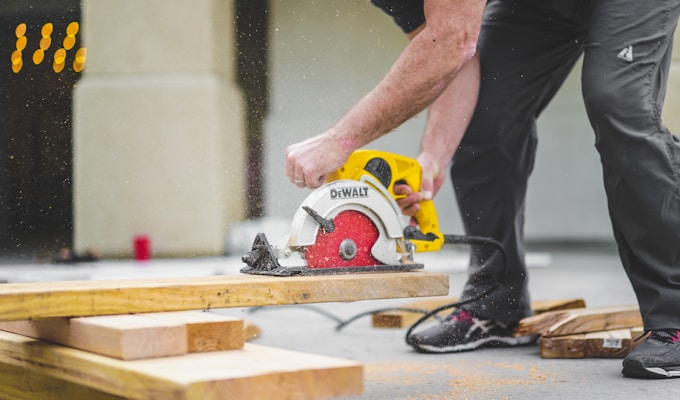
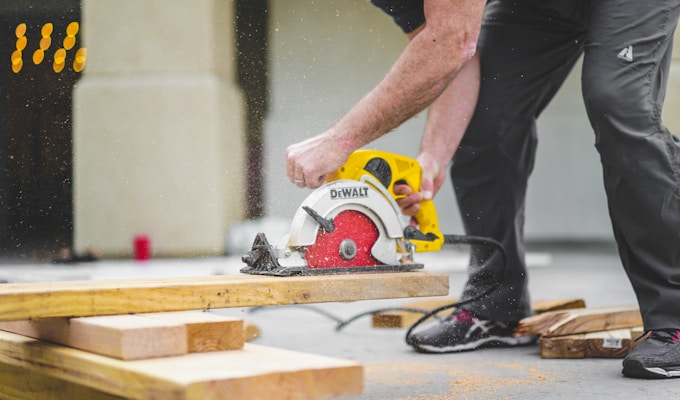
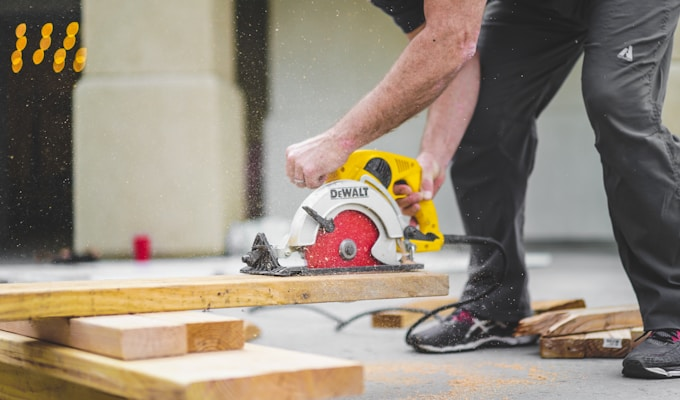
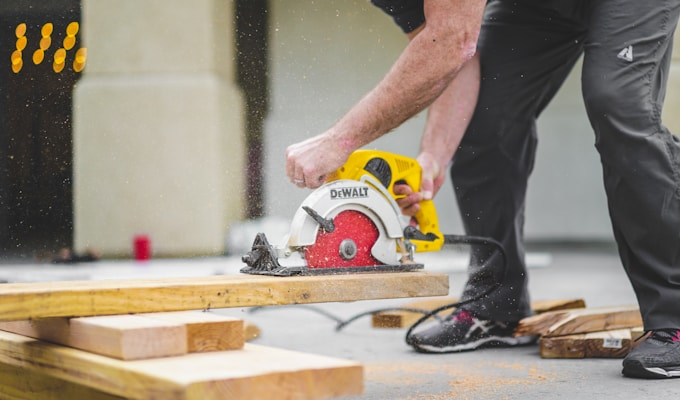
Circular saws, miter saws, and table saws: DeWalt has invested heavily here and it shows. Their circular saw line is particularly strong, with excellent blade speed and cut quality. The DCS391 is a pro-quality tool at a reasonable price point.
DeWalt’s miter saw lineup is extensive and well-regarded. Table saws from DeWalt range from budget benchtop models to serious contractor-grade equipment.
Milwaukee makes quality saws, but it’s not their emphasis. They’ve got strong offerings, but fewer models and less variety. If cutting tools are central to your work, DeWalt offers more options and proven reliability across this category.
Angle Grinders and Specialty Tools
Milwaukee dominates here. Their M18 FUEL angle grinders are industry-standard for metal fabrication and construction work. Superior brushless motor efficiency, more runtime on a charge, and better ergonomics.
DeWalt makes angle grinders. Milwaukee makes angle grinders that professionals prefer and other pros buy. If you’re doing grinding work regularly, the performance difference matters.
The Battery System Question
This is critical because batteries lock you into an ecosystem.
DeWalt: 20V XR platform. Single voltage, huge accessory ecosystem, batteries everywhere. If you already own DeWalt tools, staying in the system is obvious. If you’re starting fresh, 20V only limits you to 20V.
Milwaukee: M18 and M12 dual platform. You can build a professional-grade system across both voltages. M18 for power-hungry tools like impact drivers and circular saws. M12 for compact work, fastening, and one-handed tools. This flexibility is genius, but you need to understand which tools use which platform.
The Real Issue: Battery costs. A single DeWalt XR battery costs $40-60. Milwaukee batteries cost similar amounts but you might want batteries for both platforms. Long-term, this factors into total cost of ownership.
If you’re a homeowner with a basement full of tools, one battery platform is simpler. If you’re building a professional kit, dual platforms give you better tool choices.
By-Category Breakdown
Professional Contractors
Winner: Milwaukee (slight edge)
Milwaukee tools are now the dominant choice on commercial job sites. Better impact drivers, superior specialty tools, and stronger professional support. That said, DeWalt is still everywhere—it’s not like DeWalt tools don’t work. But Milwaukee’s advantages are real in this segment.
DIY Homeowners
Winner: DeWalt (moderate edge)
Better value, simpler single-platform battery system, easier availability, and fewer tools you actually need to own. You’re more likely to find exactly what you need at a local store at a price that doesn’t make you wince.
Woodworkers and Hobbyists
Winner: DeWalt
Better table saws, more miter saw options, stronger general-purpose tool lineup. Milwaukee makes quality tools but doesn’t focus on this market segment.
Mixed-Use (Pro + Hobby)
Winner: Depends
If you need both professional-grade impact drivers and hobby-level circular saws, Milwaukee’s dual-platform approach actually helps. You can spec out M18 for the power tools and M12 for the compact stuff. DeWalt forces everything through the 20V line.
Durability and Reliability
Both brands are durable. Both have good warranty support. Neither is going to leave you stranded.
DeWalt’s Strength: Parts availability. Everywhere. If you break a DeWalt drill chuck, you can find a replacement chuck in three stores within 10 minutes. This matters more than you’d think if your tools actually get used hard.
Milwaukee’s Strength: Build quality. Their tools feel overbuilt. More robust gearing, heavier aluminum casting, stronger chuck designs. If you work your tools, they feel like they’ll keep working.
In practice: both last a long time. DeWalt edges ahead on long-term support. Milwaukee edges ahead on how well they’re built.
Price Comparison by Category
Entry-Level Bundle ($200-300)
– DeWalt DCD777C2: Better value
– Milwaukee M18 compact: More capability per dollar but starts higher
Mid-Range Single Tools ($150-250)
– DeWalt DCD991D2: $169 (solid drill driver)
– Milwaukee M18 compact drill: $199 (more power)
Professional-Grade Tools ($300+)
– DeWalt DCD777D2: ~$99 (two-tool combo)
– Milwaukee M18 FUEL impact driver: $249 (tool only)
Key takeaway: DeWalt’s base prices are lower. Milwaukee’s performance premium costs money. How much premium you’re willing to pay depends on your use case.
Building Your Kit: A Practical Framework
If you choose DeWalt:
Start with their 20V XR two-tool combo (drill driver + impact driver). Add tools to the same platform as you need them. Prioritize circular saws and miter saws when you branch out. Total starter kit cost: $200-250.
If you choose Milwaukee:
Start with an M18 combo kit to get impact driver capability right. As your needs grow, add M12 tools for compact work. Budget higher upfront but get better professional-grade performance. Total starter kit cost: $300-400.
The Honest Reality Check
The real truth: you can’t go wrong with either brand.
DeWalt pros will tell you they’ve owned the same drill for ten years. Milwaukee pros will tell you their impact drivers are perfect. Both are right. They’ve built tools at the right quality level for their market.
The best choice depends on:
- What you’re building: Need a table saw? DeWalt is stronger. Need industrial-grade fastening? Milwaukee is superior.
- Budget: DeWalt’s entry point is lower.
- Brand loyalty you already have: Switching battery systems is annoying.
- What you see at your local store: Availability still matters, and DeWalt has more shelves.
Comparison by Specific Tool
Cordless Drills
Slight DeWalt advantage for value. Milwaukee advantage for sustained power. For most DIY drilling, both work equally well.
Impact Drivers
Milwaukee wins clearly. Better efficiency, quieter operation, superior fastening endurance.
Circular Saws
DeWalt wins clearly. Proven reliability, better availability, strong cutting performance.
Miter Saws
DeWalt wins. More models, proven track record, better ergonomics in most designs.
Battery Systems
Milwaukee wins for flexibility. DeWalt wins for simplicity and parts availability.
Angle Grinders
Milwaukee wins strongly. Professional-grade construction and performance.
Combo Kits
Depends on your needs, but generally DeWalt offers better value, Milwaukee offers better capability.
Quick Verdict
DeWalt vs Milwaukee: The Ultimate Power Tool Showdown
The Battery System Question
Top Picks: Tools That Matter
Frequently Asked Questions
Q: Can I use DeWalt and Milwaukee batteries interchangeably?
A: No. Battery platforms are proprietary. DeWalt 20V won’t work in Milwaukee M18 tools and vice versa. Plan your system accordingly.
Q: Which brand is more popular with professionals?
A: Milwaukee is gaining ground rapidly on job sites. DeWalt remains extremely popular. Both are professional-grade.
Q: Should I buy the most expensive version of each tool?
A: Not necessarily. DeWalt’s standard line often performs nearly as well as their premium XR line. Milwaukee’s FUEL line is worth it for professional use. For DIY, base models usually suffice.
Q: Are older DeWalt or Milwaukee tools still supported?
A: Generally yes, especially DeWalt due to their wider distribution. Older Milwaukee tools work fine but parts can be harder to find. Test tool longevity before committing if you’re buying used.
Q: What about cordless band saws, reciprocating saws, and other specialty tools?
A: Both brands make these. Check specific tool reviews before buying, as quality varies by model more than by brand in niche categories.
Q: How important is the 20V vs M18 voltage difference?
A: Less important than you’d think. What matters is tool-to-tool comparison. A DeWalt 20V impact driver performs similarly to a Milwaukee M18 in most applications. The overall system is what differs.
Q: Should I go with one brand or split between brands?
A: Stick with one platform unless you have compelling reasons otherwise. Battery ecosystem lock-in is real. Once you commit to DeWalt or Milwaukee, switching costs money and frustration.
Making Your Decision
Start by thinking about the tools you actually need. If your next three purchases would be a drill, impact driver, and circular saw, DeWalt’s breadth of circular saw options pushes the needle. If you need a drill, impact driver, and angle grinder, Milwaukee’s excellence with impact drivers and grinders matters more.
Don’t choose based on brand loyalty from five years ago. Don’t choose based on one internet forum post. Choose based on the specific tools you need and which brand has better options in those categories.
If you’re torn between them: buy the two-tool combo from whichever brand has the better deal today, then stick with that platform. The long-term convenience of a unified battery system matters more than a $30 price difference right now.
For deeper dives into specific tool categories, check out our reviews on impact drivers, circular saws, table saws, and miter saws. And if you’re building a complete toolkit from scratch, our guide to best power tool combo kits 2026 breaks down the top options across all price points.
Top Picks: Tools That Matter
\n
Best DeWalt Impact Driver:\nDeWalt DCD777D2 20V Compact Impact Driver – reliable, affordable entry point.
\n
Best Milwaukee Impact Driver:\nMilwaukee M18 FUEL Impact Driver – professional performance standard.
\n
Best DeWalt Circular Saw:\nDeWalt DCS391D1 Compact Circular Saw – proved performance in real-world cutting.
\n
Best Value Combo Kit:\nDeWalt 20V Combo Kit – great starter point.
\n
Best Milwaukee Compact Drill:\nMilwaukee M12 Compact Drill – perfect for tight spaces.
\n
Final Verdict
\n
DeWalt and Milwaukee both make tools that will last years and perform reliably. DeWalt offers better value and broader selection across cutting tools. Milwaukee offers superior performance in fastening and specialty categories, plus a more flexible dual-platform system.
\n
The brand that’s “better” for you depends entirely on which specific tools matter most to your projects. Evaluate them category by category, commit to one platform, and don’t look back. Either choice will serve you well.
Related Reading
- Ryobi vs DeWalt: Complete Brand Comparison
- Makita vs DeWalt: Professional Comparison
- Best Table Saws 2026
- Makita vs Milwaukee: Pro-Grade Brand Comparison
- Best Drill Presses 2026: 6 Models for Precision Drilling
- Best Thickness Planers 2026: 6 Models Tested
- Power Tool Safety Guide: Essential Rules Every Workshop Needs
- Milwaukee vs DeWalt Impact Driver: Head-to-Head 2026