Milwaukee Tool has been on an aggressive expansion tear, and their 2026 lineup announcements are no exception. From upgraded M18 FUEL tools to entirely new product categories, here’s everything we know about what Milwaukee is bringing to jobsites this year -- and what it means for contractors and serious DIYers considering the Red platform.
M18 FUEL Gets a Gen 4 Motor Upgrade
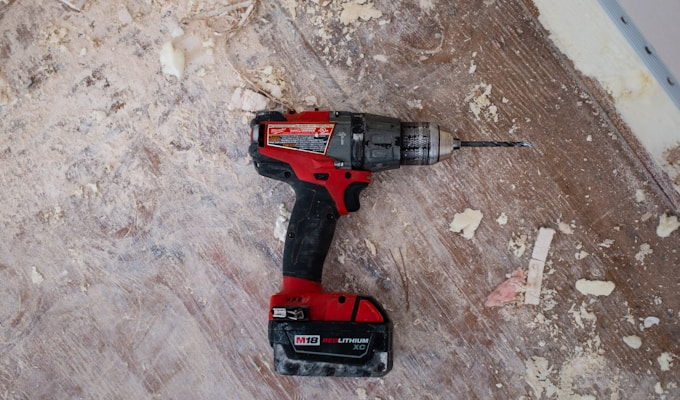
The headline news from Milwaukee’s 2026 New Product Symposium is the rollout of fourth-generation POWERSTATE brushless motors across their core M18 FUEL lineup. The new motors deliver up to 20% more power output while running cooler, which extends both tool life and runtime. The first tools receiving the Gen 4 treatment include the hammer drill/driver, impact driver, and circular saw -- the three tools most contractors reach for daily. Milwaukee claims the updated 2905-20 hammer drill now produces 1,650 in-lbs of torque, putting it firmly ahead of DEWALT’s flagship DCD998 (1,500 in-lbs) and Makita’s XPH14 (1,250 in-lbs).
The Gen 4 impact driver (2954-20) is arguably the bigger story. Milwaukee has bumped the nut-busting torque to 2,400 ft-lbs while reducing the tool’s length by nearly half an inch. Combined with the new Surge hydraulic mode that minimizes noise without sacrificing fastening speed, this could be the most significant impact driver update in years.
FORGE Battery Technology Expands
Milwaukee’s FORGE battery line, which launched in late 2024, is getting a major expansion in 2026. The FORGE platform uses a fundamentally different cell chemistry that Milwaukee claims delivers 40% more power and up to 50% longer life than their current REDLITHIUM batteries. For 2026, they’re introducing a compact FORGE 4.0Ah pack alongside the existing 6.0Ah and 8.0Ah options. The compact pack weighs just 1.4 lbs -- roughly the same as a standard REDLITHIUM CP2.0 -- but delivers performance closer to an XC5.0.
The bigger news is FORGE compatibility expanding beyond the initial launch tools. Milwaukee has confirmed that over 50 M18 tools will be “FORGE Optimized” by mid-2026, meaning they’ll automatically detect FORGE batteries and unlock additional performance modes. For existing M18 users, FORGE batteries work in any M18 tool -- you just won’t get the optimized performance boost in older models.
MX FUEL Gets Concrete and Earthwork Tools
Milwaukee’s MX FUEL platform -- their heavy-duty battery system for equipment-class tools -- is expanding into concrete and earthwork. New additions include a battery-powered plate compactor, a concrete vibrator, and a cut-off saw with a 16-inch blade capacity. These tools target rental houses and commercial contractors who want to eliminate the hassle of gas-powered equipment maintenance and emissions compliance. The MX FUEL platform’s BOLT-ON battery design allows hot-swapping without tools, and Milwaukee claims the plate compactor delivers force equivalent to gas models in the same class.
The concrete vibrator is particularly significant for the commercial concrete market. Gas-powered vibrators require fuel storage, generate fumes that are problematic in enclosed pours, and need carburetor maintenance. The MX FUEL vibrator eliminates all of that while delivering the compaction force that contractors need for structural pours. For residential contractors doing footings, slabs, and walls, this tool removes a meaningful equipment headache.
The 16-inch cut-off saw rounds out the MX FUEL concrete category. Powered by Milwaukee's high-capacity MX FUEL battery, it handles concrete, masonry, and tile cutting without the noise, fumes, and blade drag of gas-powered saws. For contractors working in occupied buildings, near OSHA-restricted emissions zones, or on interior demolition where gas exhaust is impractical, this is a genuine enabling tool rather than a nice-to-have.
New M12 Specialty Tools
The M12 platform isn’t being neglected either. Milwaukee is releasing several specialty tools that fill gaps in their compact lineup: a 12V bandfile (belt sander in a narrow form factor), an updated M12 FUEL right-angle impact wrench for automotive work, and an M12 inspection camera with a 720p display and 9-foot cable. The bandfile in particular addresses a segment that Dynalinear and other pneumatic tools have dominated -- giving finish carpenters and metal fabricators a cordless alternative for tight-space sanding and deburring.
The M12 right-angle impact wrench update targets automotive technicians working in cramped engine bays and wheel wells where the compact M12 form factor has always been the right choice. The update brings improved torque output and a new anvil retention system that prevents socket wobble during high-torque applications -- a common complaint on the previous generation.
The M12 inspection camera is Milwaukee's most capable yet: the 720p display is a significant resolution jump from the previous model's VGA-level quality, the 9-foot cable reaches most residential plumbing runs, and the built-in WiFi connects to the ONE-KEY app for saving and annotating footage. For plumbers and HVAC techs who do camera inspections regularly, this replaces rental-grade equipment at a price that makes ownership practical.
ONE-KEY 2.0 Software Platform
Milwaukee’s ONE-KEY tool tracking and customization platform is getting a major software overhaul. ONE-KEY 2.0 introduces real-time fleet dashboards, predictive maintenance alerts that warn you before a tool needs service, and integration with popular construction management platforms like Procore and PlanGrid. For large contractors managing hundreds of tools, this could significantly reduce theft losses and unexpected downtime. The updated app also adds battery health monitoring across your entire REDLITHIUM and FORGE inventory.
What This Means for Current M18 Users
If you're already invested in the M18 platform, 2026 brings welcome upgrades without forcing you to abandon anything. Here's a practical breakdown of what matters for different user profiles.
For contractors who use M18 FUEL tools daily: The Gen 4 motor update is the headline. The hammer drill and impact driver are the two most-used tools on most job sites, and a 20% power increase with lower operating temperatures is meaningful over an 8-hour shift. The reduced heat means thermal protection triggers less frequently, which means fewer mid-task power interruptions on demanding applications. If your current M18 FUEL hammer drill or impact driver is in its 3rd or 4th year of heavy use, the Gen 4 models are a compelling upgrade target.
For contractors with an existing M18 battery arsenal: FORGE batteries are fully backward compatible with all M18 tools, and all existing M18 REDLITHIUM batteries work in the new Gen 4 tools. You're not being pushed to buy a new battery platform. The FORGE investment makes most sense when your current REDLITHIUM HIGH OUTPUT packs are due for replacement -- upgrading to FORGE at that point costs roughly 30-40% more per pack but delivers meaningfully better performance and cycle life. The FORGE 4.0Ah compact pack is the most interesting new option: a small, light battery that delivers XC5.0-level performance is exactly what you want for a drill or impact driver you carry all day.
For smaller contractors and serious DIYers: The Gen 4 tool updates matter less if you're not pushing tools to their limits daily. Standard M18 FUEL Gen 3 tools are still excellent and will continue to be supported. The ONE-KEY 2.0 improvements are useful at any scale -- even tracking 5-10 tools and getting battery health monitoring is valuable for anyone who doesn't want surprise failures. The M12 additions are the most relevant for this group if you work in spaces where compact tools are essential.
For anyone considering Milwaukee vs other brands in 2026: The 2026 announcements reinforce Milwaukee's position at the top of the cordless tool performance hierarchy. The Gen 4 motors, FORGE batteries, and ONE-KEY 2.0 create a technology stack that DEWALT and Makita haven't yet matched as an integrated system. If you're starting fresh or expanding a platform, Milwaukee's 2026 lineup offers more capability at the top end than any competing ecosystem.
Gen 4 Motor: What Changed and Why It Matters
The Gen 4 POWERSTATE motor deserves a closer technical look, because "20% more power" is a marketing number that doesn't fully explain what's different or why it matters in practice.
Brushless motor performance is determined by three main factors: the stator winding design, the rotor magnet composition, and the motor control electronics. Milwaukee's Gen 4 improvements address all three. The stator windings use a tighter copper fill -- more copper per slot in the stator means more electromagnetic force generated per amp of input current. The rotor uses higher-grade neodymium magnets that maintain their magnetization better at elevated operating temperatures, which is where Gen 3 motors occasionally fell short during sustained high-load use. The motor control electronics run higher switching frequencies, which reduces power loss in the switching process and allows more precise torque modulation.
The practical result of these changes is a motor that doesn't just peak higher -- it sustains output closer to its peak for longer. The thermal headroom improvement (cooler running) is what enables this sustained performance. When a motor runs cooler, the copper windings maintain lower resistance (copper resistance increases with temperature), which means the motor is more efficient at the same power level. The thermal protection system -- which throttles the tool when temperatures spike -- triggers less often. You get more consistent performance throughout a work session.
The specific numbers Milwaukee has published: the Gen 4 hammer drill (2905-20) produces 1,650 in-lbs of torque versus 1,400 in-lbs for the Gen 3 (2904-20) -- an 18% increase. The Gen 4 impact driver (2954-20) hits 2,400 in-lbs of nut-busting torque versus 2,000 in-lbs for the 2953-20 -- a 20% increase. These aren't marginal improvements; they're the kind of gains that show up in real work. Driving a 5/8" lag bolt into LVL beam used to be a max-mode proposition where the Gen 3 driver occasionally struggled. The Gen 4 handles it in Mode 3 with headroom to spare.
The noise reduction through Surge hydraulic mode in the Gen 4 impact driver is worth noting separately. Traditional impact drivers generate noise through the mechanical impact mechanism. Surge uses a hydraulic pulse action that mimics the torque delivery of a conventional impact while generating 50% less noise. For interior finish work, occupied buildings, or any environment where impact noise is problematic, this is a genuinely useful feature rather than a marketing gimmick. The tradeoff is slightly lower peak impact energy versus pure mechanical impact, but for most fastening applications the Surge mode delivers equivalent results with dramatically less noise and vibration to the user.
What This Means for Buyers
If you’re already invested in the M18 platform, 2026 brings welcome upgrades without forcing you to abandon your existing batteries or chargers. The Gen 4 motor updates are meaningful but incremental -- if your current M18 FUEL tools are working fine, there’s no urgent reason to upgrade. However, the FORGE battery expansion is worth watching closely. As more tools become FORGE Optimized, the performance gap between standard REDLITHIUM and FORGE packs will widen.
For those choosing a new platform in 2026, Milwaukee’s announcements strengthen an already compelling ecosystem. The combination of Gen 4 motors, FORGE batteries, and ONE-KEY 2.0 gives the M18 platform a technology stack that competitors haven’t yet matched. DEWALT’s POWERSTACK batteries and Makita’s XGT 40V line are competitive on individual specs, but Milwaukee’s integrated approach -- where batteries, motors, and software work together -- creates a more cohesive experience.
We’ll be testing the Gen 4 M18 FUEL tools and FORGE compact batteries as soon as they’re available. Stay tuned for our full reviews, including head-to-head comparisons with the latest from DEWALT and Makita.