Updated March 2026 | By Jake Mercer
Quick Answer: Store batteries at room temperature (40-80°F) with a 30-50% charge, avoid fully draining them before recharging, keep the contacts clean, and always use the manufacturer's charger. These habits can extend lithium-ion battery lifespan from 3 years to 5+ years.
Why Batteries Degrade (and How to Slow It Down)
Every lithium-ion battery has a finite lifespan measured in charge cycles. One full cycle equals draining from 100% to 0% -- though partial cycles add up proportionally. A battery that goes from 100% to 50% twice has completed one full cycle. Most tool batteries deliver 800 to 1,200 full cycles before capacity drops to 80% of original. The habits below keep your batteries at the high end of that range.
I've worked in my shop for going on 15 years, and the batteries I've treated well are still going strong at year six. The ones I left sitting in the truck through a Texas summer? Dead in two years. The difference isn't luck -- it's knowing what actually damages lithium-ion chemistry and avoiding it.
Understanding Lithium-Ion Battery Chemistry
You don't need a chemistry degree to care for your batteries better, but understanding the basics of what's happening inside the pack helps explain why each care habit matters. This section is practical -- just what's relevant to the tool user.
A lithium-ion cell moves lithium ions between a graphite anode and a lithium oxide cathode through a liquid electrolyte. Every charge and discharge cycle causes slight physical expansion and contraction of the electrode materials and gradual breakdown of the electrolyte. This degradation is unavoidable, but its rate varies dramatically based on how you treat the cells.
Charge cycles and depth of discharge. A full cycle (0% to 100%) stresses cells more than a partial cycle. Discharging to only 30% before recharging is gentler on the cells than running to empty. This is why the "keep charge between 30-80%" recommendation exists -- staying in the middle of the state-of-charge range minimizes both the high-voltage stress at full charge and the mechanical stress of deep discharge. In practice, for tool batteries this means recharging when the tool starts to slow down, not waiting until the battery cuts out entirely.
Temperature sensitivity. Heat accelerates every degradation mechanism in lithium-ion chemistry. The electrolyte breaks down faster at high temperatures. Elevated temperature during charging causes lithium plating on the anode -- metallic lithium deposits that permanently reduce capacity and create safety risks. A battery stored at 95°F degrades roughly twice as fast as one stored at 72°F. This is not a small effect -- it's the single biggest variable in how long your batteries last.
The role of the BMS. Every lithium-ion battery pack contains a Battery Management System -- a small circuit board that monitors individual cell voltages, temperature, and current. The BMS protects cells from over-charge, over-discharge, and over-temperature. It also communicates with smart chargers. This is why using the manufacturer's charger matters: it's designed to work with the BMS protocol for that specific pack chemistry. A generic charger may ignore BMS signals and charge at the wrong rate or voltage.
1. Store at the Right Temperature
Heat is the biggest enemy of lithium-ion cells. Storing batteries in a hot garage, car trunk, or direct sunlight accelerates chemical degradation even when the battery isn't being used. A battery sitting at 100°F for three months loses more capacity than one that's been used heavily at room temperature. The car trunk in summer is the single fastest way to kill an expensive battery pack.
- Ideal storage temp: 50-70°F (10-21°C)
- Acceptable range: 40-80°F (4-27°C)
- Avoid: Anything above 100°F or below freezing for extended periods
2. Don't Fully Drain Before Recharging
Lithium-ion batteries don't have a "memory effect" like old nickel-cadmium batteries. You don't need to drain them fully before charging -- that's a habit left over from NiCad chemistry that actively harms lithium-ion cells. In fact, deep discharges stress the cells more than partial cycles, and repeated full discharges are one of the faster ways to wear out a pack.
The BMS typically cuts power at around 3V per cell to prevent deep discharge damage, but letting it reach this cutoff point repeatedly causes cumulative harm. Better practice is to recharge when you notice the tool slowing down -- this typically corresponds to about 20-30% remaining charge and keeps the cells comfortably above the damage threshold.
- Best practice: Recharge when the tool starts to slow down or when the indicator drops to one bar
- Avoid: Running the tool until the battery protection circuit cuts power completely, especially on a regular basis
- Exception: If you haven't used a battery in several months, running it down to 30% before storage is actually beneficial -- see Tip 3
3. Don't Store Fully Charged (or Fully Drained)
If you won't use a battery for weeks or months, don't store it at 100% charge. A full charge creates sustained high-voltage stress on the cathode material, and this stress causes gradual capacity loss even when the battery is sitting on a shelf doing nothing. Long-term storage at 100% is one of the most common causes of the "I haven't used this battery in six months and now it barely holds a charge" situation.
The same applies in reverse -- never store at 0%. A battery that's been completely discharged and left for months can enter a state of deep self-discharge where cell voltage drops below the recovery threshold. The charger won't recognize it, and the capacity may be permanently compromised. The BMS may refuse to allow charging at all as a safety measure.
- Ideal storage charge: 30-50% (2 bars on most indicators)
- Check every 3-4 months: Self-discharge will slowly drain the pack during storage. If it's dropped to one bar, give it a brief top-up charge to get back to 40-50% and leave it again
- Never store at 0%: Deep discharge during storage can permanently damage cells or trigger BMS lockout
4. Keep Battery Contacts Clean
Dirty or corroded contacts create electrical resistance, which generates heat and reduces charging efficiency. In a charging session, extra resistance means the charger delivers slightly less energy to the cells per minute and slightly more is lost as heat -- neither is good for longevity. In use, corroded contacts can cause voltage drop under load, making the drill feel weak or stall even with a charged battery.
The contacts are the metal strips on the top of the battery pack and the corresponding contacts in the tool and charger ports. Workshop environments expose them to wood dust, metal shavings, drywall powder, and moisture -- all of which accumulate on contacts over time.
- Clean with: A dry cloth for loose debris, or a cotton swab with isopropyl alcohol (90% or higher) for residue and oxidation
- Frequency: Every few months or whenever you notice residue, reduced runtime, or charging issues
- Also clean: The tool's battery port contacts and the charger port contacts -- the connection is only as good as its dirtiest surface
- Don't use: Steel wool, sandpaper, or abrasives -- these scratch the contact surface and create more corrosion over time
5. Use the Manufacturer's Charger
Name-brand chargers include microprocessor-controlled circuitry designed specifically for their battery chemistry and BMS protocol. They monitor temperature, voltage per cell, and charge rate at every stage of the charging curve -- adjusting the current as the battery approaches full charge to avoid the high-voltage stress that causes long-term degradation. They also abort charging if a problem is detected, protecting both the battery and your property.
Third-party chargers may charge faster but accomplish this by skipping the tapering phase that protects cells near full charge, or by ignoring temperature signals from the BMS. The "faster charge" you get from a generic charger is often at the direct expense of cell longevity. The math rarely favors saving $15 on a charger to wear out a $60-100 battery pack 30% faster.
6. Let Hot Batteries Cool Before Charging
After heavy use -- running a circular saw for 30 minutes or driving 200 deck screws back-to-back -- a battery pack can be noticeably warm to the touch, sometimes uncomfortably so. Charging a hot battery stresses the cells because lithium-ion chemistry is particularly sensitive to the combination of high temperature and high voltage that occurs during charging. Heat while charging is one of the most damaging conditions for long-term capacity.
Most quality chargers include a thermal management feature that monitors battery temperature and delays full charging until the pack cools to a safe range. However, the charger is sensing temperature at the contact point -- not at the hottest cell in the pack. By the time the charger's sensor detects the heat, the cells themselves have already been at elevated temperature for a period. Better to let the battery cool before putting it on the charger.
- Wait 15-30 minutes after heavy use before placing the battery on the charger -- longer if the pack is very hot
- Set the battery on a hard surface in open air -- not in the tool bag or toolbox where it can't shed heat
- Most quality chargers will delay charging until the battery cools, but it's better not to rely on this
7. Rotate Your Batteries
If you own multiple batteries, rotate them evenly. This is more important than most people realize. Using one battery exclusively while the other sits unused for months creates unequal wear -- the primary battery accumulates many more charge cycles than the backup, and the backup may self-discharge to dangerously low levels from neglect. Even wear across all packs gives you the longest total service life from your investment.
A simple rotation: label your batteries A, B, and C. Always reach for A first, B second, C third. When you charge, move C to the A slot. This ensures each battery sees equal use and charging cycles over the course of a season.
Battery Storage Guide for Different Seasons
The threat to battery life changes with the seasons, and your storage habits should change with them. Here's how to handle each season correctly.
Summer Storage
Summer is the most dangerous season for batteries left in the garage or vehicle. A closed car on an 85°F day can reach internal temperatures of 140°F or higher -- far beyond the upper limit for safe lithium-ion storage. Even a garage without air conditioning can sustain temperatures above 100°F during afternoon heat in warm climates. If you're on a summer job site and leaving for the weekend, bring the batteries inside -- not into a hot trailer or locked truck. Store them somewhere climate-controlled at a 40-50% charge level.
Winter Storage (Seasonal Shutdown)
If you're shutting down tool use for the winter -- as many weekend DIYers do -- charge each battery to 40-50%, clean the contacts, and store them indoors at room temperature. A basement or climate-controlled storage room is ideal. Do not store in an unheated garage or shed where temperatures will drop below freezing. Repeated freeze-thaw cycles cause microscopic damage to electrode materials over time. Check the charge every 2-3 months and top up to 40% if the indicator has dropped below one bar.
Year-Round Daily Use
For professionals or active users who use batteries daily, temperature and charge management are still important but the cycle count becomes the limiting factor. Daily-use batteries should be charged on the manufacturer's charger at the end of each workday (not left on the charger overnight after reaching full), rotated evenly, and inspected for contact corrosion monthly. Replace packs when runtime has dropped to 50% of new -- this usually corresponds to around 2-3 years of daily professional use.
Long-Term Storage (3+ Months Unused)
If a battery will sit unused for three months or more -- seasonal tools like outdoor power equipment, or a backup platform you rarely reach for -- follow this protocol: charge to 40-50%, remove from the tool and charger, store in a sealed plastic bag to exclude moisture, keep between 60-70°F, and check every 8 weeks. If the charge indicator has dropped to one bar, give a brief charge back to 40-50% and return to storage. Never store fully charged for this duration.
Step-by-Step: Reviving a Sluggish Battery Pack
A battery that feels weak -- short runtime, sluggish tool response, early cutoff -- is not necessarily dead. Sometimes it just needs to be conditioned. Here's how to attempt a revival before you write off a $60-100 pack.
- Fully charge the battery. Place it on the manufacturer's charger and let it complete a full charge cycle. If the charger shows an error or fault light, the battery may have tripped a protection circuit -- leave it on the charger for 30 minutes and check again. Some chargers will attempt a recovery charge on a battery that tripped the low-voltage cutoff.
- Run the battery to cutoff. Install it in a tool and do moderate work -- not hammering the heaviest task, but real work that puts a load on the battery. Run it until the protection circuit cuts power. This is a controlled full discharge that resets the cell balancing in the BMS.
- Let it rest for 30 minutes. After the BMS cuts power, there is still a small residual charge in the cells. Letting the battery rest allows the cell voltages to equalize slightly before the next charge cycle.
- Fully charge again on the manufacturer's charger. Allow the charger to complete the full cycle, including the slow-taper phase at the end. Don't pull it early.
- Test the runtime. Install the battery and do a normal work session. Compare runtime to a known-good battery of the same size. If runtime has improved notably from before the conditioning cycle, repeat the process once more -- some batteries respond better to two full cycles.
- Assess the result. If the battery now delivers reasonable runtime (70% or more of a new pack of the same Ah), continue using it. If runtime is still below 50% of a comparable new pack, the cells have degraded beyond recovery and replacement is the practical choice.
Quick Reference: Battery Care by Brand Platform
The core care principles apply across all lithium-ion tool batteries, but each major platform has specific characteristics worth knowing.
| Platform | Key Notes | Charger to Use |
|---|---|---|
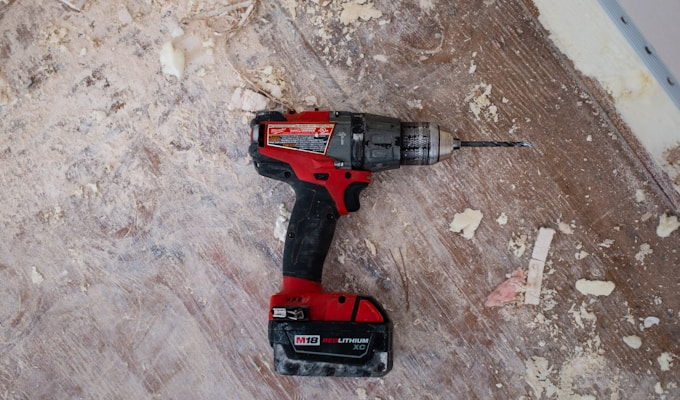
| Milwaukee M18 | REDLITHIUM packs use multi-cell monitoring. The M18 RAPID charger is excellent for longevity -- it adjusts charge rate per cell. Avoid leaving HD (high-demand) packs on basic chargers for extended periods. M18 and M18 FUEL tools are compatible with all M18 packs, but HD packs are worth the extra cost for high-draw tools like circular saws and rotary hammers. | M18 Rapid Charger or M18 Multi-Voltage Charger |
| DeWalt 20V MAX | 20V MAX packs are actually 18V nominal -- the "20V MAX" rating is peak, not continuous. FLEXVOLT 60V packs are backward-compatible down to 20V tools. The DCB115 charger is the standard choice. FLEXVOLT packs should only be charged on FLEXVOLT-compatible chargers. DeWalt batteries are generally more heat-tolerant than competing platforms but still benefit from cool storage. | DCB115 (20V) or DCB609 (FLEXVOLT) |
| Ryobi ONE+ | ONE+ is one of the largest ecosystems by tool count and battery backward/forward compatibility is broad -- ONE+ packs from 2012 onward work in current tools. The tradeoff is that older chargers lack the cell-monitoring sophistication of newer ones. If you have a Ryobi battery collection built up over years, consider upgrading to a current PCCK617L2 charger to improve charging quality across all your packs. HP (high-performance) ONE+ packs deliver noticeably more runtime in demanding tools. | Current PCG002 or the charger included with HP kit purchases |
Battery Lifespan Expectations
| Usage Pattern | Expected Lifespan |
|---|---|
| Professional daily use | 2-3 years |
| Regular weekend DIY | 4-5 years |
| Occasional light use | 5-7 years |
FAQ
Should I leave batteries on the charger?
Modern smart chargers stop charging at 100% and won't overcharge. However, leaving batteries on the charger for days or weeks keeps them at full charge, which creates sustained high-voltage stress that accelerates long-term capacity loss. The practical habit: charge before you need them, remove when the charger shows complete, and store at 40-50% if you won't use them within a week.
Can I revive a dead battery?
If a battery has been deeply discharged and the charger won't recognize it, the BMS may have locked out due to a low-voltage condition. Some quality chargers have a "recovery" mode that attempts to trickle charge up to the recognition threshold -- leave the battery on the charger for an extended period (1-2 hours) and see if it begins a normal charge cycle. If the charger shows a permanent fault light, the cells may be unrecoverable. Some people attempt jump-starting with another battery, but this bypasses the BMS protection and can be dangerous -- it also voids warranties. If the pack is within warranty, contact the manufacturer first.
Do higher Ah batteries last longer overall?
Not necessarily in terms of lifespan. A 5.0Ah battery goes through fewer charge cycles than a 2.0Ah battery to do the same work, which can extend its useful life from a cycle-count perspective. But the cells are the same chemistry -- the care habits are identical. A high-Ah pack that's stored hot or run to empty regularly will die just as fast as a mishandled 2.0Ah pack. The advantage of higher Ah is per-session runtime and reduced discharge depth per use, not fundamentally better cell quality.
Why does my battery feel warm after charging?
Some warmth at the end of a charge cycle is normal -- the final phase of lithium-ion charging (the constant-voltage taper phase) generates a small amount of heat. However, if the battery is uncomfortably hot rather than merely warm, or if it gets hot early in the charge cycle, something is wrong. Possible causes: charging a battery that was already hot from use (let it cool first), a failing cell creating disproportionate resistance, or a charger that's not properly matched to the battery. A battery that consistently gets hot while charging should be inspected or replaced.
Is it bad to charge a battery to 100% if I'm using it the same day?
Charging to 100% for same-day use is fine -- the harm from 100% charge comes from sustained storage at that level, not from immediate use. If you're charging in the morning and using all day, charging fully is the right move. The 40-50% storage recommendation is for batteries that will sit unused for a week or more.
Can I store batteries in a refrigerator to extend life?
No, and this is a persistent myth. Refrigerator temperatures (35-40°F) are at the low end of acceptable storage range, but the real problem is moisture. Moving a cold battery into a warm workshop creates condensation inside the pack, which is corrosive to contacts and potentially damaging to the BMS circuit board. Room temperature storage in a dry location is always better than refrigerator storage for tool batteries.
ToolShedTested is reader-supported. When you buy through links on our site, we may earn an affiliate commission at no extra cost to you.
Related Guides
- Brushless vs Brushed Motors Explained
- Best Cordless Drills 2026
- Makita vs Milwaukee: Full Brand Comparison
- Milwaukee M18 Battery Platform Guide
- DeWalt 20V MAX Battery Guide
- Ryobi ONE+ Battery Guide
- Find Your Perfect Tool