The Bottom Line, Up Front
All three platforms make excellent tools. There is no wrong answer here. But there is a right answer for you, and it depends on what you’re building, what you’re willing to spend, and how deep you want to go into a battery ecosystem.
- Choose DeWalt 20V MAX if you want the widest tool selection, competitive pricing, and you work across multiple trades.
- Choose Milwaukee M18 if you’re a professional who needs the most powerful cordless tools available and you value the ONE-KEY digital platform.
- Choose Makita 18V LXT if you prioritize ergonomics, build quality, and you prefer tools that are lighter and quieter without sacrificing capability.
Now let’s break down exactly why.
Quick Comparison: DeWalt vs Milwaukee vs Makita (2026)
| Feature | DeWalt 20V MAX | Milwaukee M18 | Makita 18V LXT |
|---|---|---|---|
| Battery Voltage (nominal) | 18V (marketed as 20V MAX) | 18V (marketed as M18) | 18V |
| High-Output Battery | FLEXVOLT 60V/20V | M18 HIGH OUTPUT (12.0Ah) | 18V LXT BL (6.0Ah) |
| Total Tools in Platform | 300+ | 280+ | 350+ |
| Brushless Tools | Most new tools since 2019 | All M18 FUEL tools | All LXT BL tools |
| Smart Tool Platform | Tool Connect (limited) | ONE-KEY (comprehensive) | None |
| Battery Warranty | 3 years | 3 years (5 with registration) | 3 years |
| Tool Warranty | 3 years | 5 years | 3 years |
| Starter Kit Price (drill/driver + impact + 2 batteries) | ~$199-249 | ~$249-299 | ~$199-249 |
| Made In | USA, Mexico, China (varies) | USA, China, Vietnam (varies) | Japan, China, Romania (varies) |
| Best For | General contractors, DIYers | Heavy-duty professional trades | Finish carpentry, weight-sensitive work |
Battery Ecosystems Explained
DeWalt 20V MAX
Let’s address the marketing first: DeWalt’s “20V MAX” batteries are 18V nominal, the same as Milwaukee and Makita. The 20V figure is the peak voltage of a fully charged 5-cell lithium pack. It’s technically accurate but functionally meaningless — all three brands deliver comparable voltage under load.
Where DeWalt gets interesting is FLEXVOLT. Their 60V MAX batteries are backwards-compatible with all 20V MAX tools, automatically switching between 20V and 60V modes depending on the tool. This means you can run a 20V drill and a 60V table saw from the same battery. No other brand offers this level of voltage flexibility within a single battery.
DeWalt’s battery range in 2026:
- 20V MAX Compact: 1.5Ah, 2.0Ah — lightweight for drills and drivers
- 20V MAX XR: 4.0Ah, 5.0Ah, 6.0Ah — extended runtime for saws and grinders
- 20V/60V FLEXVOLT: 6.0Ah (20V) / 2.0Ah (60V), 9.0Ah (20V) / 3.0Ah (60V), 15.0Ah (20V) / 5.0Ah (60V) — for high-draw tools
The FLEXVOLT ecosystem is DeWalt’s biggest competitive advantage. If you see yourself eventually needing a cordless miter saw, table saw, or planer, starting with DeWalt 20V MAX now gives you a bridge to 60V power later without buying new batteries. For a hands-on look at DeWalt’s flagship drill, read our DeWalt DCD999B FLEXVOLT drill review. We also tested the DeWalt DCG418B FLEXVOLT grinder on the same platform.
Milwaukee M18
Milwaukee’s M18 platform is the most powerful 18V system available, period. Their M18 FUEL tools consistently top performance benchmarks in independent testing, delivering more torque, faster cutting speeds, and longer runtime than comparable tools from DeWalt and Makita. The trade-off is that Milwaukee tools tend to be slightly heavier and more expensive.
Milwaukee’s battery lineup in 2026:
- M18 Compact: 1.5Ah, 2.0Ah, 3.0Ah (CP/HO) — for light-duty tools
- M18 XC: 4.0Ah, 5.0Ah, 6.0Ah — standard extended capacity
- M18 HIGH OUTPUT: 6.0Ah HO, 8.0Ah HO, 12.0Ah HO — maximum power delivery for FUEL tools
- MX FUEL: Separate high-voltage platform for equipment-class tools (core drill, pipe threader, breaker)
The HIGH OUTPUT batteries are worth highlighting. They use a different cell chemistry that delivers more current under load, meaning your M18 FUEL circular saw or grinder runs at higher sustained power with a HIGH OUTPUT battery compared to a standard XC battery, even at the same amp-hour rating. No other brand has this kind of tiered performance within the same voltage platform.
Milwaukee’s ONE-KEY system is another differentiator. It’s a Bluetooth-based platform that lets you customize tool settings (torque limits, speed, ramp-up) from your phone, track tool location and usage, and manage inventory across a fleet. For contractors managing crews, it’s genuinely useful. For home users, it’s mostly unnecessary. See our detailed reviews of the Milwaukee 2904-20 M18 FUEL drill and the Milwaukee 2880-20 M18 FUEL grinder for hands-on impressions.
Makita 18V LXT
Makita has the deepest catalog of any cordless platform: over 350 tools on the 18V LXT battery. That includes expected categories like drills and saws, but also less common tools like a cordless coffee maker, heated jacket, and Bluetooth speaker. If there’s a tool you might need, Makita probably makes a battery-powered version.
Makita’s battery lineup in 2026:
- 18V LXT Compact: 1.5Ah, 2.0Ah — lightweight for finesse tools
- 18V LXT: 3.0Ah, 4.0Ah, 5.0Ah, 6.0Ah — standard range
- 18V x 2 (36V): Uses two 18V batteries for 36V power — miter saws, rear-handle circular saws, blowers
- 40V MAX XGT: Separate high-voltage platform (not compatible with LXT)
Makita’s 18V x 2 approach is clever: instead of designing new batteries for high-draw tools, they built tools that accept two 18V packs in series for 36V. It means your existing batteries scale up. The downside is weight — two batteries plus the tool gets heavy. And unlike DeWalt’s FLEXVOLT, you need to carry and charge two batteries for every 36V session.
Where Makita truly excels is ergonomics and build quality. Their tools are consistently lighter than equivalent Milwaukee models (often by 0.5-1 lb), with lower vibration and better balance. Japanese engineering heritage shows in the fit and finish. Pros who use tools all day — especially finish carpenters, trim workers, and cabinetmakers — often gravitate to Makita for this reason. For specifics, see our Makita XFD131 drill kit and Makita XAG04Z angle grinder reviews.
Head-to-Head: Core Tool Comparison
Drill/Driver
| Spec | DeWalt DCD777 | Milwaukee 2801-20 | Makita XFD131 |
|---|---|---|---|
| Max Torque | 340 in-lbs | 500 in-lbs | 530 in-lbs |
| Speed (high) | 1,750 RPM | 1,800 RPM | 1,500 RPM |
| Weight (bare) | 2.6 lbs | 3.4 lbs | 3.9 lbs |
| Chuck | 1/2" ratcheting | 1/2" all-metal | 1/2" all-metal |
| Motor | Brushless | POWERSTATE Brushless | BL Brushless |
Winner: Depends on your priority. DeWalt is the lightest by a significant margin. Milwaukee delivers the best chuck and overload protection. Makita has the highest torque rating in a compact form factor. For most people, the DeWalt is the best everyday drill. For heavy-duty use, Milwaukee. For our full drill rankings, see our best cordless drills 2026 roundup.
Impact Driver
| Spec | DeWalt DCF887 | Milwaukee 2853-20 | Makita XDT16Z |
|---|---|---|---|
| Max Torque | 1,825 in-lbs | 2,000 in-lbs | 1,600 in-lbs |
| Speed (high) | 3,250 RPM | 3,600 RPM | 3,600 RPM |
| Weight (bare) | 2.0 lbs | 2.2 lbs | 2.1 lbs |
| Speed Settings | 3 | 4 (via ONE-KEY) | 4 (Quick-Shift) |
Winner: Milwaukee 2853-20. The M18 FUEL impact driver is the benchmark. 2,000 in-lbs of torque with 4-speed selection and ONE-KEY customization. Makita’s Quick-Shift mode is excellent for preventing cam-out in delicate fastening, making it the better choice for finish work.
Circular Saw (7-1/4”)
| Spec | DeWalt DCS573B | Milwaukee 2732-20 | Makita XSH06Z |
|---|---|---|---|
| Blade Speed | 5,800 RPM | 5,800 RPM | 5,000 RPM |
| Cut Depth (90°) | 2-9/16" | 2-7/16" | 2-9/16" |
| Weight (bare) | 7.1 lbs | 7.9 lbs | 8.2 lbs (2 batteries) |
| Battery | 20V / FLEXVOLT | M18 FUEL | 18V x 2 (36V) |
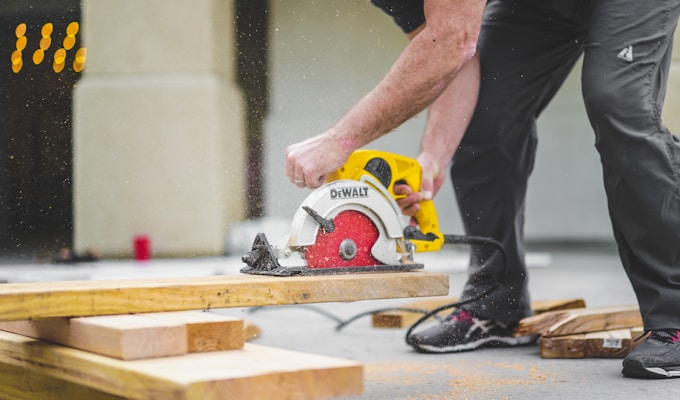
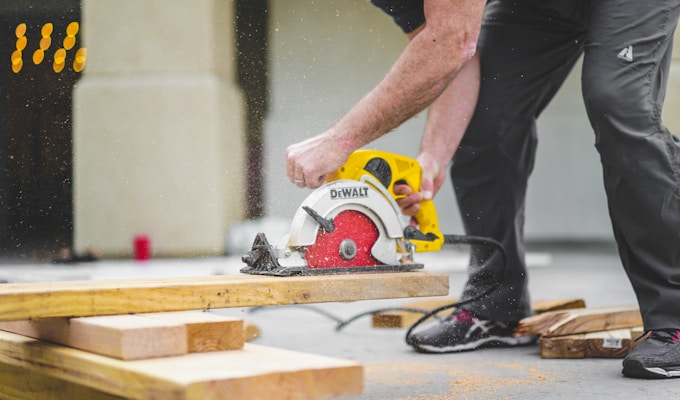
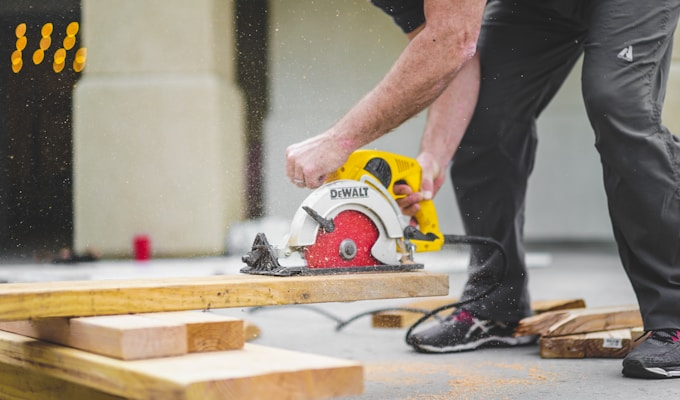
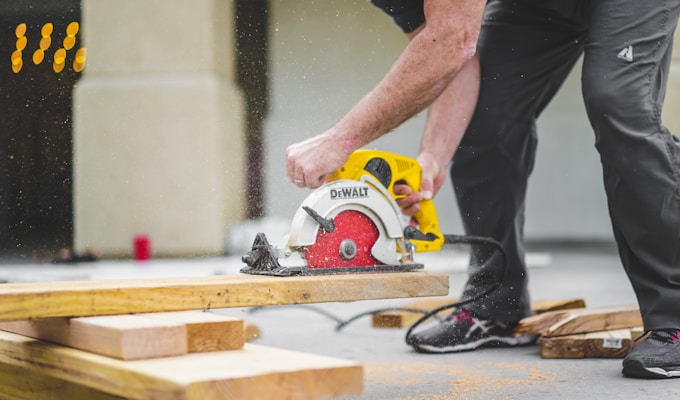
Winner: DeWalt DCS573B. The FLEXVOLT advantage shines here. With a 60V FLEXVOLT battery, this saw delivers corded-equivalent power from a single, compact battery. Makita’s 18V x 2 approach works well but adds weight and requires two batteries. Milwaukee’s M18 FUEL circular saw is powerful but benefits significantly from a HIGH OUTPUT battery to match the DeWalt’s sustained cut performance.
Price Comparison: Getting Into Each Ecosystem
The real cost isn’t the first tool — it’s the ecosystem. Once you buy 2-3 batteries and a charger, switching brands means starting over. Here’s what it costs to get rolling with each platform:
Starter Kit: Drill/Driver + Impact Driver + 2 Batteries + Charger
- DeWalt DCK278C2: ~$229 — Check price on Amazon
- Milwaukee 2997-22: ~$299 — Check price on Amazon
- Makita XT269M: ~$249 — Check price on Amazon
5-Tool Expansion (adding circular saw, reciprocating saw, work light)
- DeWalt: ~$550-650 total ecosystem cost
- Milwaukee: ~$650-800 total ecosystem cost
- Makita: ~$550-700 total ecosystem cost
Milwaukee commands a premium of roughly 15-25% over DeWalt and Makita. That premium buys you more power, better warranty coverage, and the ONE-KEY platform. Whether that premium is worth it depends entirely on whether you need that extra capability or if “good enough” is good enough.
Warranty and Support
| Coverage | DeWalt | Milwaukee | Makita |
|---|---|---|---|
| Tool Warranty | 3 years | 5 years | 3 years |
| Battery Warranty | 3 years | 3 years (5 w/ registration) | 3 years |
| Free Service | 1 year | 5 years | 3 years |
| Service Centers | Extensive (SBD network) | Extensive | Good (fewer locations) |
Milwaukee wins warranty coverage decisively. Five years on tools with five years of free service is the best in the industry. If a tool fails on a jobsite three years in, Milwaukee replaces it. DeWalt and Makita will repair it, but the process can be slower.
Where Each Brand Wins
DeWalt Wins At:
- Voltage flexibility: FLEXVOLT is unmatched. One battery platform from 20V to 60V.
- Jobsite availability: Every Home Depot, every Lowe’s, every hardware store stocks DeWalt. Getting replacement batteries or accessories on a Saturday morning is never a problem.
- Price-to-performance ratio: DeWalt tools are rarely the most powerful or the lightest, but they’re consistently good across every category at a fair price.
- Construction trades: Framing, concrete, general contracting. The FLEXVOLT miter saw and table saw give DeWalt an edge in heavy carpentry.
Milwaukee Wins At:
- Raw power: M18 FUEL tools consistently deliver the most torque, fastest cutting speed, and longest runtime in head-to-head tests.
- Plumbing and electrical trades: Milwaukee dominates with specialized tools: ProPEX expansion tools, cable pullers, compact band saws, knockout punch sets. No one else comes close in trade-specific tooling.
- Tool tracking and management: ONE-KEY is a real advantage for fleet management. If you have 20+ tools on a commercial jobsite, knowing where every tool is and how it’s being used saves real money.
- Warranty: 5-year tool warranty and free service. Hands down the best support program.
- Innovation pace: Milwaukee releases new M18 FUEL tools faster than either competitor, consistently pushing performance boundaries.
Makita Wins At:
- Weight and ergonomics: Makita tools are consistently 10-20% lighter than equivalent Milwaukee models. Over an 8-hour day, that matters.
- Vibration control: Makita’s anti-vibration technology (AVT) in their rotary hammers and reciprocating saws is best-in-class. Workers report significantly less fatigue.
- Catalog depth: Over 350 tools on 18V LXT, including oddball but useful items like cordless coffee makers, fans, radios, and heated vests.
- Finish carpentry and woodworking: Lighter tools with precise speed control make Makita the favorite of trim carpenters, cabinetmakers, and furniture builders.
- Build quality and longevity: Makita’s Japanese engineering heritage results in tools that often outlast competitors, particularly in motor and gear train durability.
- Dust extraction: Makita’s Auto-Start Wireless System (AWS) for automatic dust extractor activation is the best implementation in the industry.
The Ecosystem Lock-In Reality
Here’s what no one tells you: after you buy 4-5 tools and 3-4 batteries on one platform, you’re invested $800-1,200 in batteries alone. Switching platforms means starting over. That’s not a flaw in the system — it’s the whole point. Battery platforms are designed to keep you buying within the ecosystem.
This means your first purchase is the most important one. Before buying a starter kit, think about what tools you’ll need in the next 3-5 years:
- If your future includes a cordless miter saw, table saw, or planer: DeWalt 20V/FLEXVOLT gives you the cleanest upgrade path.
- If you need trade-specific tools (plumbing, electrical, HVAC): Milwaukee M18 has tools the others don’t make.
- If you value light weight and plan to use mostly drills, drivers, and saws: Makita 18V LXT will treat you well for decades.
Related Articles
- Milwaukee vs DeWalt Impact Driver: Head-to-Head 2026
- Makita vs Milwaukee: Which Brand Wins for Pros?
- DeWalt vs Milwaukee: Full Brand Comparison
- Makita vs Ryobi: Which Is Better for DIY?
- Ryobi vs Milwaukee: Is the Upgrade Worth It?
- Best DeWalt Tools 2026
- Best Milwaukee Tools 2026
- Best Impact Drivers 2026
- Best Cordless Tool Combo Kits 2026
Our Verdict
For professional contractors doing general construction: Start with DeWalt. The FLEXVOLT ecosystem gives you the most flexibility as your tool collection grows, and the tools are consistently strong across every category.
For professionals in specialized trades (plumbing, electrical, mechanical): Start with Milwaukee. No other brand matches their trade-specific tool selection, and the 5-year warranty gives you peace of mind on tools that earn their keep every day.
For finish carpenters, woodworkers, and weight-conscious users: Start with Makita. Lighter tools, better vibration control, and a massive catalog. Your wrists and elbows will thank you after 20 years.
For home DIYers: Honestly, buy whichever brand has the best combo kit deal at your local store this weekend. At the homeowner level, the performance differences between these three brands are marginal. Pick the color you like, start building, and don’t look back.
--- ## Frequently Asked Questions